

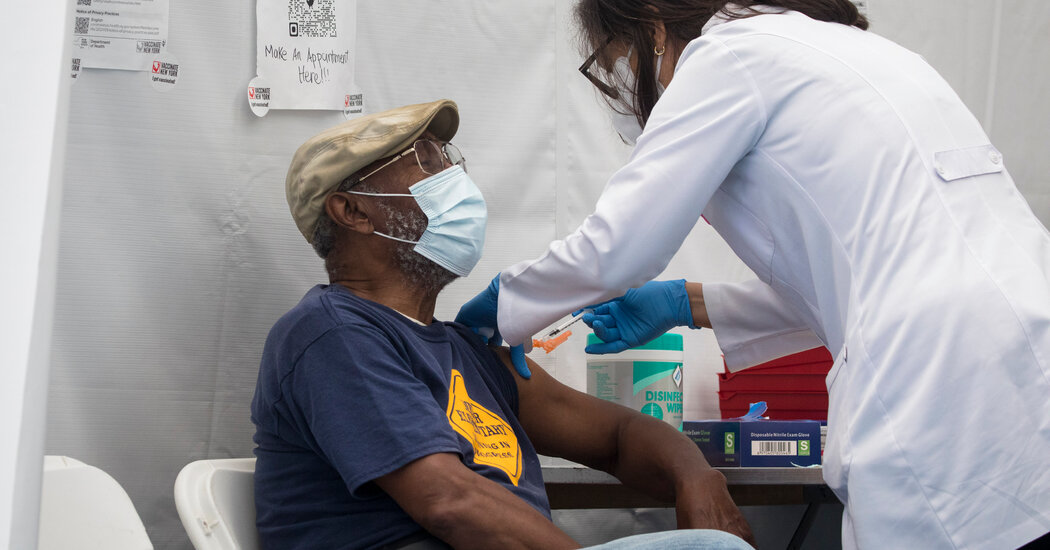
Americans who received a third dose of a coronavirus vaccine in recent weeks reported side effects at roughly the same rates as they had after their second shots, the Centers for Disease Control and Prevention said on Tuesday, a reassuring sign about the safety of additional doses.
At the time of the C.D.C. study, which stretched from mid-August to mid-September, additional vaccine doses were only authorized for people with compromised immune systems who had gotten two doses of the Pfizer-BioNTech or Moderna vaccine. Last week, though, federal regulators authorized Pfizer booster shots for broad swaths of the general population, making the safety of the additional doses an issue of intense interest for health officials, doctors and ordinary Americans.
The C.D.C. analyzed how commonly people reported side effects after a third dose compared with a second among 12,600 recipients who had filled out surveys as part of a voluntary safety monitoring system.
Reactions at the injection site, like pain or swelling, were reported by 79.4 percent of recipients after a third vaccine dose, compared with 77.6 percent after a second dose. Slightly smaller numbers of people experienced systemic reactions, like a fever or headache: 74.1 percent of people reported those side effects after dose three, compared with 76.5 percent after dose two.
“Most reported local and systemic reactions were mild to moderate, transient, and most frequently reported the day after vaccination,” the study’s authors said.
The study focused on people who had received a third dose of the same vaccine that they had originally received, either from Pfizer-BioNTech or Moderna. The C.D.C. said that too few people had reported receiving an additional dose of the Johnson & Johnson vaccine, or an additional dose from a different vaccine maker than they had originally received, to study those side effects.
The results reinforced findings from a small clinical trial of third shots of the Pfizer vaccine that the company’s scientists outlined to federal medical advisers last week. That trial, too, found that adverse reactions after a third dose were similar to those after a second.
While the C.D.C. study covered only a period when people with immune problems were eligible for additional doses, the data likely also included people without such conditions who had nevertheless received a third shot, the study’s authors wrote. In all, the study said, about 2.2 million people had received additional doses by Sept. 19, the end of the C.D.C. study period.
24World Media does not take any responsibility of the information you see on this page. The content this page contains is from independent third-party content provider. If you have any concerns regarding the content, please free to write us here: contact@24worldmedia.com

The Biden administration on Wednesday canceled...
Every family has its archetypes, so here’s...
On March 7, 2024,1 Dr. Naomi Wolf sounded an...
There are many benefits to buying and consuming...
On a December morning in central London, more...
In the 10 years since the drugmaker Gilead...

Bill Harris: Omega-3 – A Simple Way to Lower Your Risk of Disease

Chasing a hockey dream together: How Luke and Sophia Kunin make the first NHL-PWHL marriage work

Why Constipation Is on the Rise

‘To the Future’: Saudi Arabia Spends Big to Become an A.I. Superpower
Antidepressants: What to Know About Uses and Side Effects

Is Eating Eggshells Beneficial?

How hockey helped make J.J. McCarthy one of NFL Draft’s most intriguing prospects

Aspartame Classified as 'Possibly Carcinogenic'

Why You Want More Carbon Dioxide

Mark Clattenburg: The celebrity referee turned PGMOL agitator… via Gladiators

Everton Is Back on Market as Deal With 777 Partners Falters