

She landed work in a canning and munitions factory outside Rochester, N.Y. But she found the conditions unsafe and unfair and organized some of the workers to strike, unaware of the futility of making demands on the federal government in wartime.
She was arrested and charged with instigating a riot. But the booking officer realized she was younger than she claimed and, instead of jailing her, sent her back to Kentucky. It was a trial run at speaking truth to power, which she would do throughout her life.
Back home, she found work as a domestic, cooking, cleaning and taking care of children, all without benefit of electricity, plumbing or refrigeration.
“Eula found solace in helping neighbors through tough times,” Mr. Bhatraju wrote.
She married her first husband, McKinley Hall, a miner, in 1944. He was a heavy drinker who was more interested in making moonshine than mining coal, and he abused her physically, according to her biography. Her neighbors started looking after her, and she in turn started looking after them. She gradually became the local fixer for people in trouble.
This included rushing a very pregnant neighbor to several hospitals, all of which turned the woman away because she didn’t have a primary doctor and couldn’t pay. At the last hospital, Mrs. Hall yelled at the intake nurse and threatened to call the local newspaper if the staff members wouldn’t help. They did, the birth went fine, and Mrs. Hall then took the woman’s plight to a meeting of hospital officials, where she unleashed a diatribe at them for allowing people to suffer.
She read two influential books that reinforced her courage to speak out: “Night Comes to the Cumberlands: A Biography of a Depressed Area” (1963), by Harry Caudill, and “The Other America” (1962), by Michael Harrington. Both books helped inspire President Lyndon B. Johnson’s war on poverty — and Mrs. Hall.
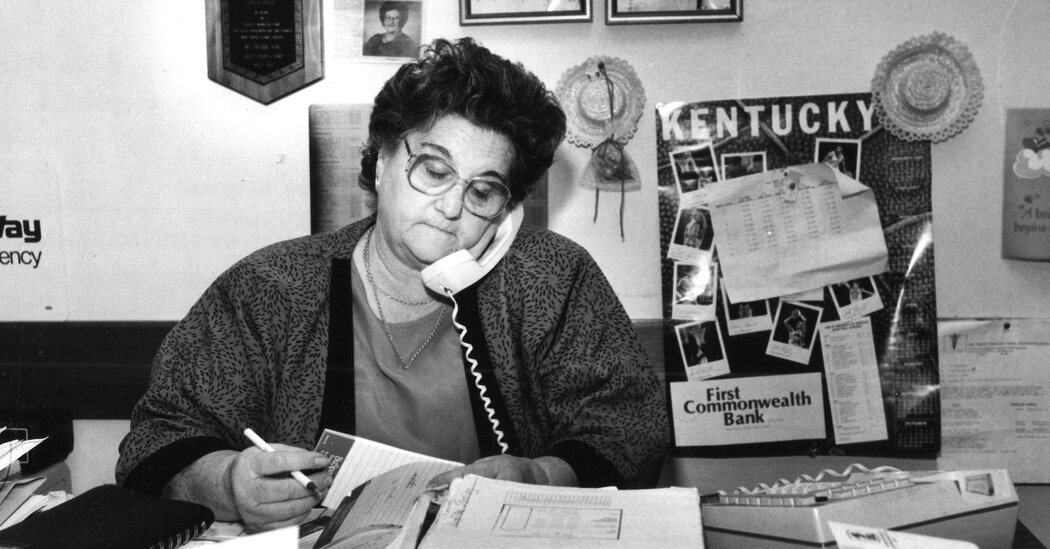
She participated in miners’ strikes throughout the region. She was elected president of the Kentucky Black Lung Association and organized frequent bus trips to Washington, where she lobbied for better benefits for miners and for widow’s benefits. She was often the only woman at the table.
24World Media does not take any responsibility of the information you see on this page. The content this page contains is from independent third-party content provider. If you have any concerns regarding the content, please free to write us here: contact@24worldmedia.com

The Biden administration on Wednesday canceled...
Every family has its archetypes, so here’s...
On March 7, 2024,1 Dr. Naomi Wolf sounded an...
There are many benefits to buying and consuming...
On a December morning in central London, more...
In the 10 years since the drugmaker Gilead...

Bill Harris: Omega-3 – A Simple Way to Lower Your Risk of Disease

Chasing a hockey dream together: How Luke and Sophia Kunin make the first NHL-PWHL marriage work

Why Constipation Is on the Rise

‘To the Future’: Saudi Arabia Spends Big to Become an A.I. Superpower

Antidepressants: What to Know About Uses and Side Effects

Is Eating Eggshells Beneficial?

How hockey helped make J.J. McCarthy one of NFL Draft’s most intriguing prospects

Aspartame Classified as 'Possibly Carcinogenic'
Why You Want More Carbon Dioxide

Mark Clattenburg: The celebrity referee turned PGMOL agitator… via Gladiators

Everton Is Back on Market as Deal With 777 Partners Falters