

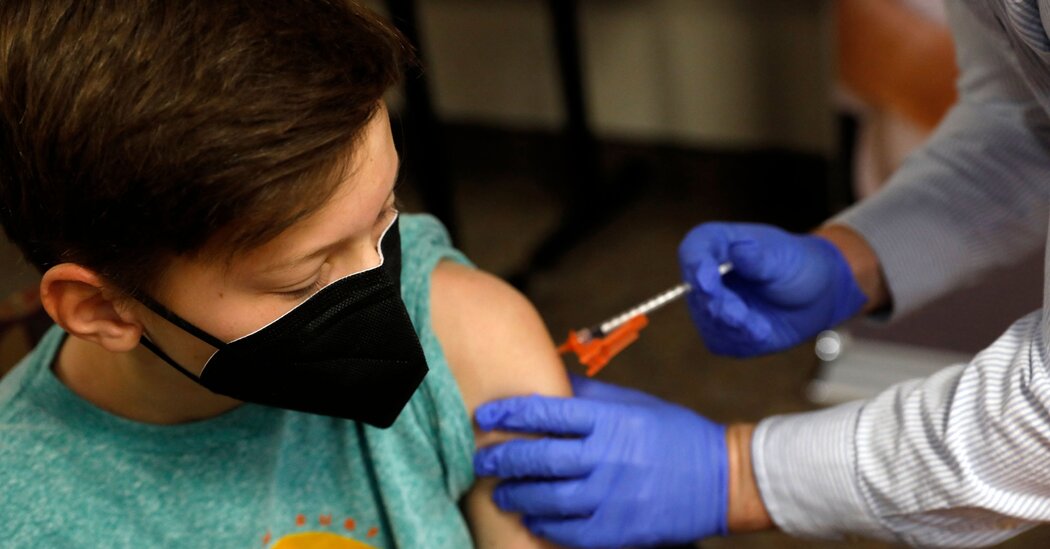
Scientific advisers to the Centers for Disease Control and Prevention on Tuesday unanimously endorsed the Pfizer-BioNTech coronavirus vaccine for children ages 5 through 11, a move that will buttress defenses against a possible surge as winter arrives and ease the worries of tens of millions of pandemic-weary parents.
If Dr. Rochelle Walensky, the agency’s director, formally accepts the recommendation, as expected, inoculations for these children could begin as soon as this week. Dr. Walensky made a brief appearance as the meeting began, noting that the day was “one that many of us have been very eager to see.”
The C.D.C. panel’s endorsement arrives just as Americans prepare for a potentially risky holiday season. Cases in the United States have been falling steadily for weeks, but experts have warned that indoor gatherings may send the rates soaring again. Many Americans seem determined to celebrate; already airlines are bracing for what may be the busiest travel season since the start of the pandemic.
While relatively few of the 29 million children in this age group will be fully immunized a month from now, even partial vaccination will provide some protection against the coronavirus. Every million doses given to children ages 5 to 11 would prevent about 58,000 cases and 226 hospitalizations in that group, according to the C.D.C.
Immunizing these children is expected to prevent about 600,000 new cases from November 2021 to March 2022. And rising immunity may reduce the chances that young children will transmit the virus to vulnerable adults in their families and communities, health officials noted.
Vaccinations of younger children are likely to help keep schools open. Virus outbreaks forced about 2,300 schools to close between early August and October, affecting more than 1.2 million students, according to data presented at the committee meeting.
The pandemic has also stalled routine immunizations, widened education gaps and escalated rates of anxiety and depression among children. “Vaccination of children ages 5 to 11 years will not only help prevent Covid-19 infection and serious consequences of infection in this age group, but will also help children emotionally and socially,” said Dr. Pamela Rockwell, who represents the American Academy of Family Physicians on the C.D.C. panel.
Still, about three in 10 parents say they will definitely not get the vaccine for their 5- to 11-year-old child, according to the most recent poll by the Kaiser Family Foundation. Only about three in 10 parents said they would immunize their child “right away,” a percentage that has barely budged since similar polls in July and September.
Many other parents are eager to see their children vaccinated as quickly as possible. Anticipating the C.D.C.’s decision, the Biden administration has enlisted more than 20,000 pediatricians, family doctors and pharmacies to administer the shots. About 15 million doses are already being shipped to vaccination sites across the country, federal officials said on Monday.
Daniel E. Slotnik contributed reporting.
24World Media does not take any responsibility of the information you see on this page. The content this page contains is from independent third-party content provider. If you have any concerns regarding the content, please free to write us here: contact@24worldmedia.com

The Biden administration on Wednesday canceled...
Every family has its archetypes, so here’s...
On March 7, 2024,1 Dr. Naomi Wolf sounded an...
There are many benefits to buying and consuming...
On a December morning in central London, more...
In the 10 years since the drugmaker Gilead...

Bill Harris: Omega-3 – A Simple Way to Lower Your Risk of Disease


Chasing a hockey dream together: How Luke and Sophia Kunin make the first NHL-PWHL marriage work

Why Constipation Is on the Rise

‘To the Future’: Saudi Arabia Spends Big to Become an A.I. Superpower

Antidepressants: What to Know About Uses and Side Effects

Is Eating Eggshells Beneficial?

How hockey helped make J.J. McCarthy one of NFL Draft’s most intriguing prospects

Aspartame Classified as 'Possibly Carcinogenic'

Why You Want More Carbon Dioxide

Mark Clattenburg: The celebrity referee turned PGMOL agitator… via Gladiators

Everton Is Back on Market as Deal With 777 Partners Falters