

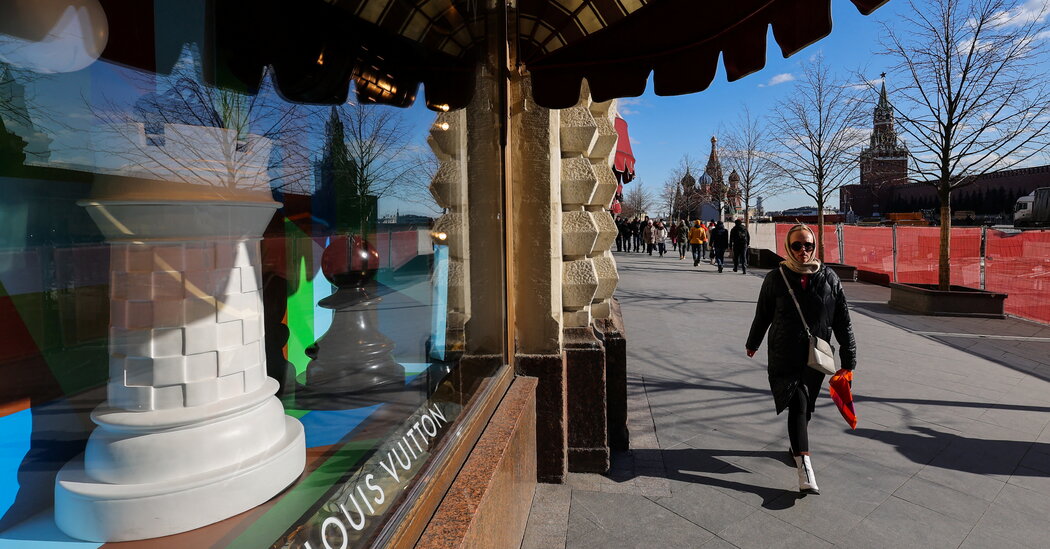
If Mr. Xi and Mr. Putin organize their own economic coalition, they could bring in other nations seeking to shield themselves from Western sanctions — a tool that all recent U.S. presidents have used.
“Your interdependence can be weaponized against you,” said Dani Rodrik, a professor of international political economy at Harvard Kennedy School. “That’s a lesson that I imagine many countries are beginning to internalize.”
The Ukraine war, he added, has “probably put a nail in the coffin of hyperglobalization.”
China and, increasingly, Russia have taken steps to wall off their societies, including erecting strict censorship mechanisms on their internet networks, which have cut off their citizens from foreign perspectives and some commerce. China is on a drive to make critical industries self-sufficient, including for technologies like semiconductors.
And China has been in talks with Saudi Arabia to pay for some oil purchases in China’s currency, the renminbi, The Wall Street Journal reported; Russia was in similar discussions with India. The efforts show a desire by those governments to move away from dollar-based transactions, a foundation of American global economic power.
For decades, prominent U.S. officials and strategists asserted that a globalized economy was a pillar of what they call the rules-based international order, and that trade and financial ties would prevent major powers from going to war. The United States helped usher China into the World Trade Organization in 2001 in a bid to bring its economic behavior — and, some officials hoped, its political system — more in line with the West. Russia joined the organization in 2012.
But Mr. Putin’s war and China’s recent aggressive actions in Asia have challenged those notions.
“The whole idea of the liberal international order was that economic interdependence would prevent conflict of this kind,” said Alina Polyakova, president of the Center for European Policy Analysis, a research group in Washington. “If you tie yourselves to each other, which was the European model after the Second World War, the disincentives would be so painful if you went to war that no one in their right mind would do it. Well, we’ve seen now that has proven to be false.”
“Putin’s actions have shown us that might have been the world we’ve been living in, but that’s not the world he or China have been living in,” she said.
24World Media does not take any responsibility of the information you see on this page. The content this page contains is from independent third-party content provider. If you have any concerns regarding the content, please free to write us here: contact@24worldmedia.com

The Biden administration on Wednesday canceled...
Every family has its archetypes, so here’s...
On March 7, 2024,1 Dr. Naomi Wolf sounded an...
There are many benefits to buying and consuming...
On a December morning in central London, more...
In the 10 years since the drugmaker Gilead...
Bill Harris: Omega-3 – A Simple Way to Lower Your Risk of Disease

Chasing a hockey dream together: How Luke and Sophia Kunin make the first NHL-PWHL marriage work

Why Constipation Is on the Rise
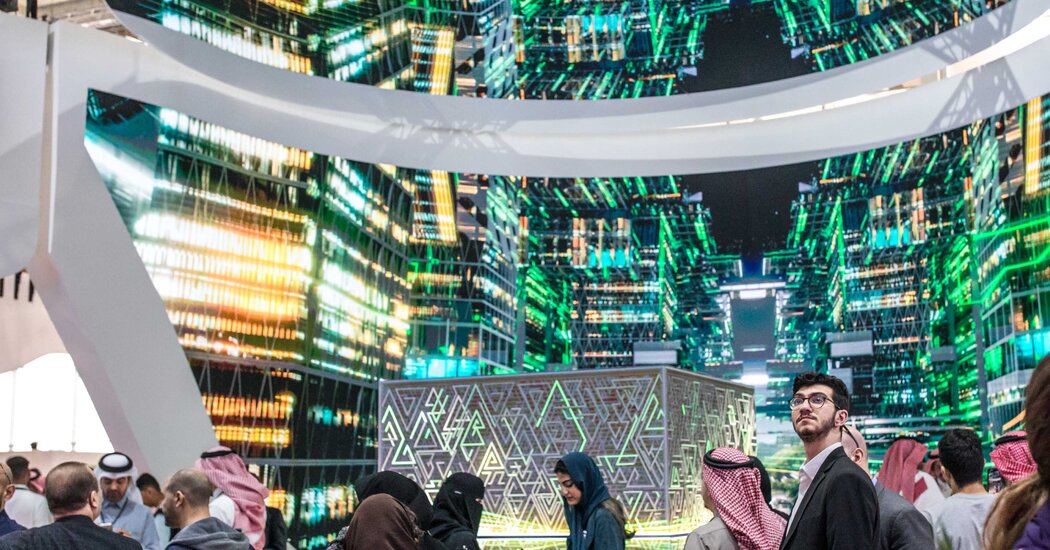
‘To the Future’: Saudi Arabia Spends Big to Become an A.I. Superpower
Antidepressants: What to Know About Uses and Side Effects

Is Eating Eggshells Beneficial?

How hockey helped make J.J. McCarthy one of NFL Draft’s most intriguing prospects
Aspartame Classified as 'Possibly Carcinogenic'
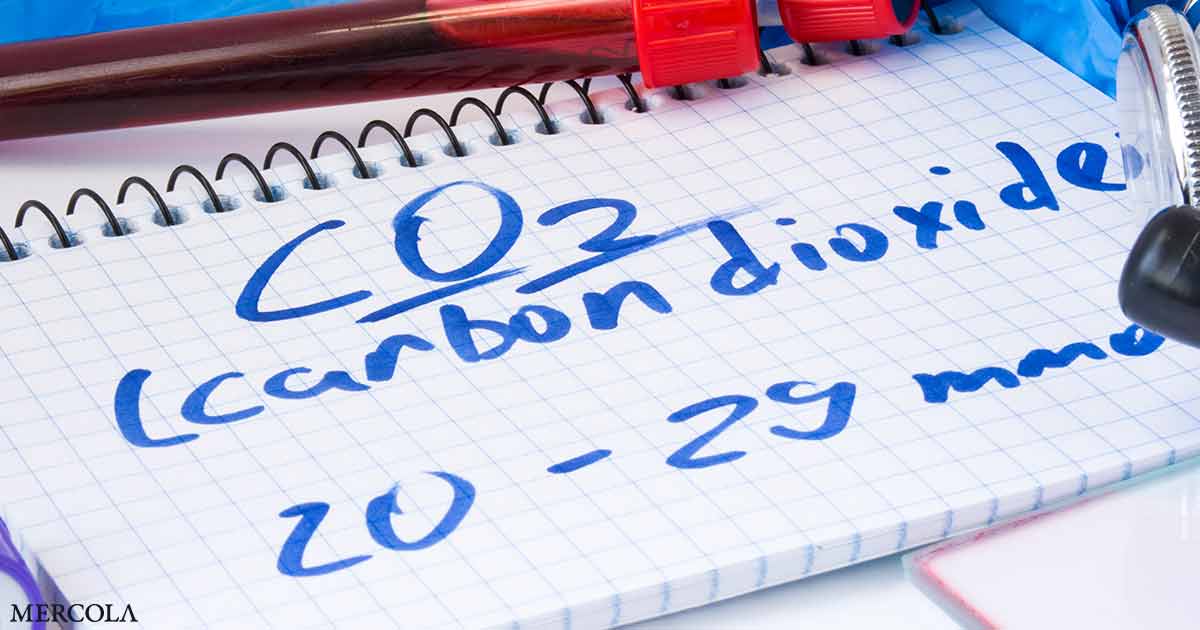
Why You Want More Carbon Dioxide
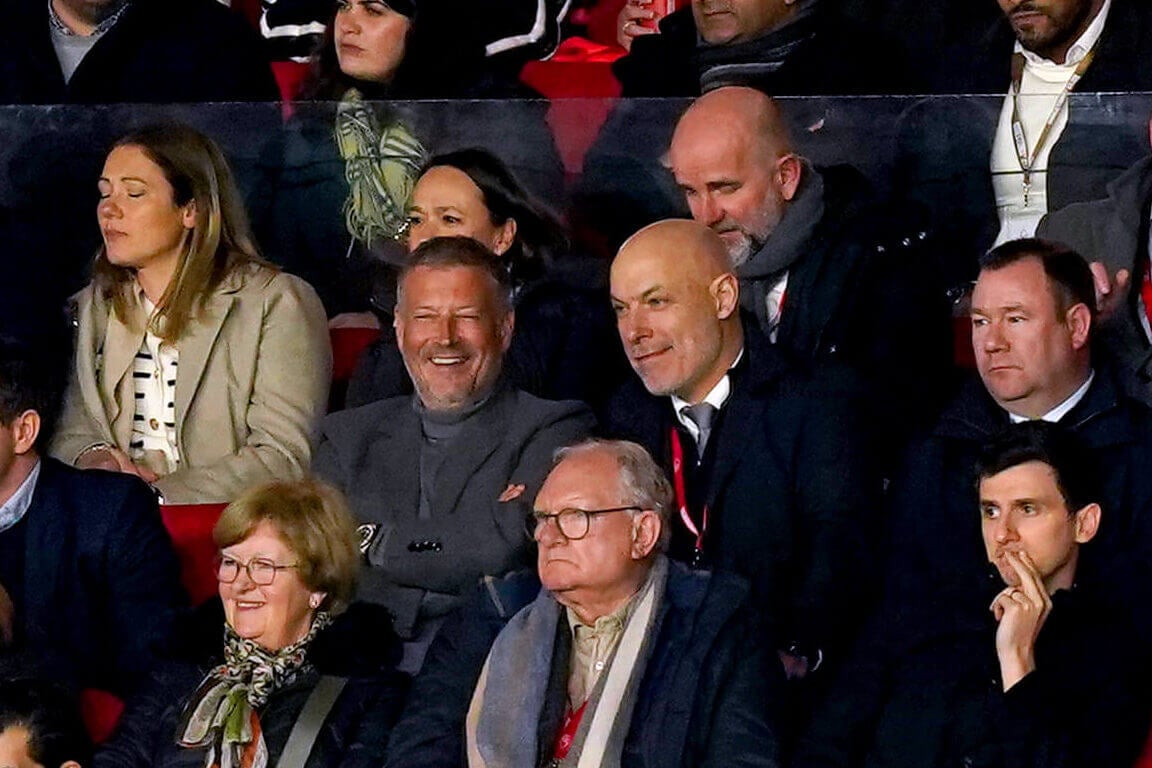
Mark Clattenburg: The celebrity referee turned PGMOL agitator… via Gladiators
Everton Is Back on Market as Deal With 777 Partners Falters