

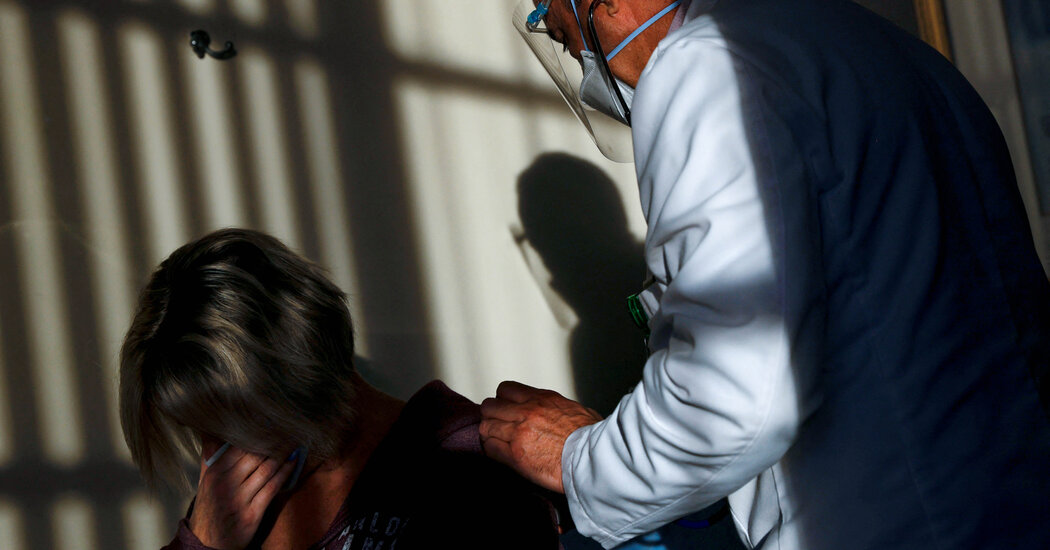
After having Covid, people were 55 percent more likely to be taking prescribed antidepressants and 65 percent more likely to be taking prescribed anti-anxiety medications than contemporaries without Covid, the study found.
Overall, more than 18 percent of the Covid patients received a diagnosis of or prescription for a neuropsychiatric issue in the following year, compared with less than 12 percent of the non-Covid group. Covid patients were 60 percent more likely to fall into those categories than people who didn’t have Covid, the study found.
The study found that patients hospitalized for Covid were more likely to be diagnosed with mental health issues than those with less serious coronavirus infections. But people with mild initial infections were still at greater risk than people without Covid.
“Some people always argue that ‘Oh, well, maybe people are depressed because they needed to go to the hospital and they spent like a week in the I.C.U.,’” said the senior author of the study, Dr. Ziyad Al-Aly, chief of research and development at the V.A. St. Louis Health Care System and a clinical epidemiologist at Washington University in St. Louis. “In people who weren’t hospitalized for Covid-19, the risk was lower but certainly significant. And most people don’t need to be hospitalized, so that is really the group that’s representative of most people with Covid-19.”
The team also compared mental health diagnoses for people hospitalized for Covid with those hospitalized for any other reason. “Whether people were hospitalized for heart attacks or chemotherapy or whatever other conditions, the Covid-19 group exhibited a higher risk,” Dr. Al-Aly said.
The study involved electronic medical records of 153,848 adults who tested positive for the coronavirus between March 1, 2020, and Jan. 15, 2021, and survived for at least 30 days. Because it was early in the pandemic, very few were vaccinated before infection. The patients were followed until Nov. 30, 2021. Dr. Al-Aly said his team was planning to analyze whether subsequent vaccination modified people’s mental health symptoms, as well as other post-Covid medical issues the group has studied.
The Covid patients were compared with more than 5.6 million patients in the Veterans system who did not test positive for the coronavirus and more than 5.8 million patients from before the pandemic, in the period spanning March 2018 through January 2019. To try to gauge the mental health impact of Covid-19 against that of another virus, the patients were also compared with about 72,000 patients who had the flu during the two and a half years before the pandemic. (Dr. Al-Aly said there were too few flu cases during the pandemic to provide a contemporaneous comparison.)
24World Media does not take any responsibility of the information you see on this page. The content this page contains is from independent third-party content provider. If you have any concerns regarding the content, please free to write us here: contact@24worldmedia.com

The Biden administration on Wednesday canceled...
Every family has its archetypes, so here’s...
On March 7, 2024,1 Dr. Naomi Wolf sounded an...
There are many benefits to buying and consuming...
On a December morning in central London, more...
In the 10 years since the drugmaker Gilead...
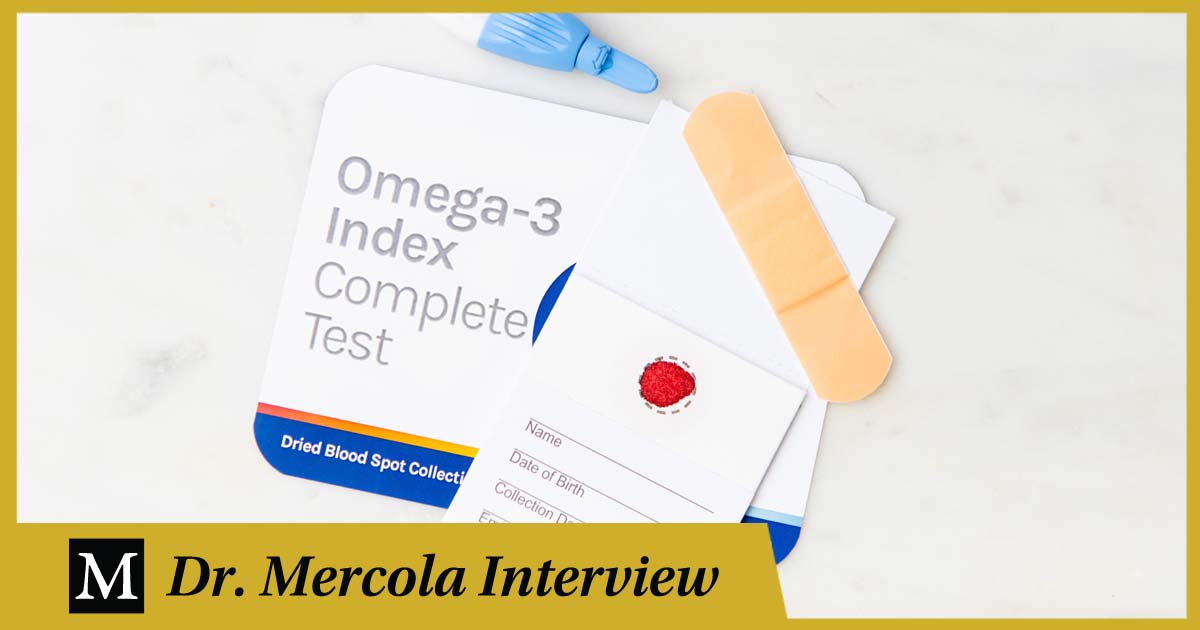
Bill Harris: Omega-3 – A Simple Way to Lower Your Risk of Disease

Chasing a hockey dream together: How Luke and Sophia Kunin make the first NHL-PWHL marriage work

Why Constipation Is on the Rise

‘To the Future’: Saudi Arabia Spends Big to Become an A.I. Superpower
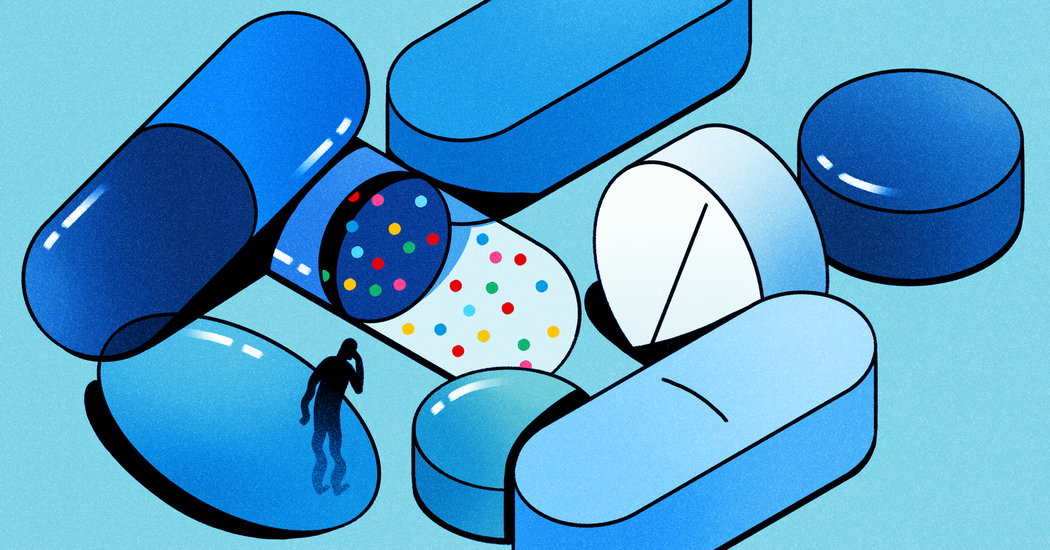
Antidepressants: What to Know About Uses and Side Effects

Is Eating Eggshells Beneficial?

How hockey helped make J.J. McCarthy one of NFL Draft’s most intriguing prospects

Aspartame Classified as 'Possibly Carcinogenic'

Why You Want More Carbon Dioxide

Mark Clattenburg: The celebrity referee turned PGMOL agitator… via Gladiators

Everton Is Back on Market as Deal With 777 Partners Falters