


Companies can conduct post-market trials with participants from other countries, but may face similar challenges recruiting participants if those countries approve the drug before trials are completed. the drug has not yet been approved outside of the United States, but Biogen has filed for regulatory review in the European Union, Japan, Brazil and elsewhere.
Aduhelm is a monoclonal antibody that targets a protein, amyloid, that clumps into plaques in the brains of Alzheimer’s patients and is considered a biomarker of the disease. One thing both critics and supporters of approval agree on is that the drug substantially reduces levels of amyloid. The F.D.A. said that the drug’s effect on a biomarker qualified it for the accelerated approval program.
Still, reducing amyloid is not the same thing as slowing symptoms of dementia. Over more than two decades of clinical trials, many amyloid-reducing drugs failed to address symptoms, a history that, some experts say, made it especially important that aducanumab’s data be convincing.
“Although the Aduhelm data are complicated with respect to its clinical benefits, FDA has determined that there is substantial evidence that Aduhelm reduces amyloid beta plaques in the brain and that the reduction in these plaques is reasonably likely to predict important benefits to patients,” Dr. Cavazzoni, of the F.D.A., wrote on the agency’s site.
Biogen officials said that the drug provided long-awaited support for a theory that attacking amyloid can help if done early enough. Supporters of approval also said that it’s possible that clearing amyloid early on could help rein in the disease down the road, providing additional benefit beyond slightly delayed early decline. But Alzheimer’s experts note that supposition is completely untested.
The crux of the controversy over the drug involved two Phase 3 trials with results that contradicted each other: One suggested the drug slightly slowed cognitive decline while the other trial showed no benefit. The trials were stopped early by a data monitoring committee that found the drug didn’t appear to be showing any benefit. Consequently, over a third of the 3,285 participants in those trials were never able to complete them.
Biogen later said that it had analyzed additional data and concluded that in one of the trials a high dose could delay cognitive decline by 22 percent or about four months over 18 months. In the trial’s primary measurement, the high dose appeared to slow decline by 0.39 on an 18-point scale rating memory, problem-solving skills and function. A lower dose in that trial and high and low doses in the other showed no statistically significant benefit over a placebo.
24World Media does not take any responsibility of the information you see on this page. The content this page contains is from independent third-party content provider. If you have any concerns regarding the content, please free to write us here: contact@24worldmedia.com

The Biden administration on Wednesday canceled...
Every family has its archetypes, so here’s...
On March 7, 2024,1 Dr. Naomi Wolf sounded an...
There are many benefits to buying and consuming...
On a December morning in central London, more...
In the 10 years since the drugmaker Gilead...
Bill Harris: Omega-3 – A Simple Way to Lower Your Risk of Disease

Chasing a hockey dream together: How Luke and Sophia Kunin make the first NHL-PWHL marriage work

Why Constipation Is on the Rise

‘To the Future’: Saudi Arabia Spends Big to Become an A.I. Superpower
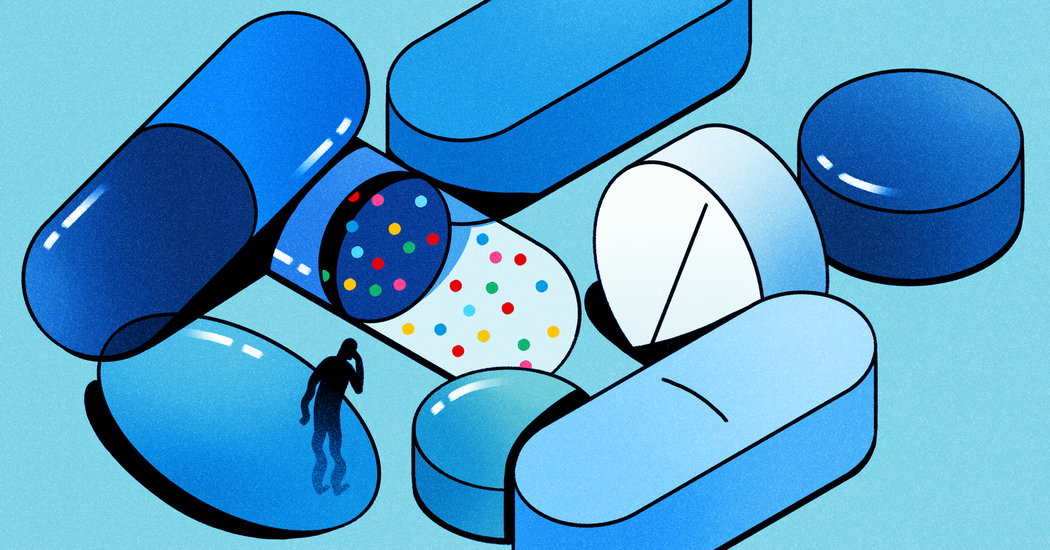
Antidepressants: What to Know About Uses and Side Effects

Is Eating Eggshells Beneficial?

How hockey helped make J.J. McCarthy one of NFL Draft’s most intriguing prospects

Aspartame Classified as 'Possibly Carcinogenic'

Why You Want More Carbon Dioxide

Mark Clattenburg: The celebrity referee turned PGMOL agitator… via Gladiators

Everton Is Back on Market as Deal With 777 Partners Falters