

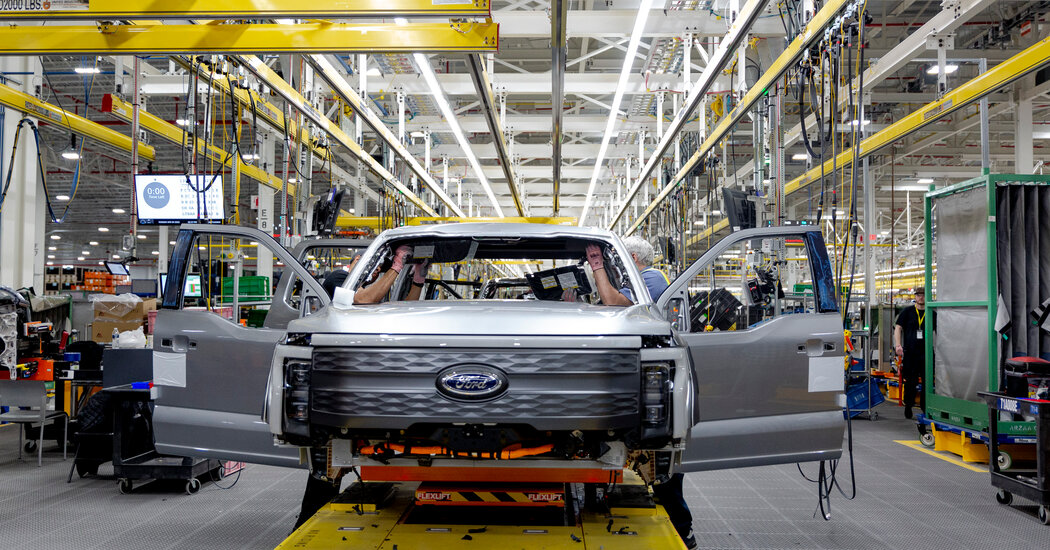
Ford is seeking to insulate itself from U.S.-China tensions by opting to own the factory entirely and only licensing technology from CATL, which supplies batteries to Tesla, BMW and other large automakers.
“This project is aimed at de-risking that, by actually building out the capacity and capability to scale this technology in the United States, where Ford has control, over the manufacturing, over the work force,” Lisa Drake, Ford’s vice president of E.V. industrialization, said in a conference call with reporters.
Ford’s contract with CATL includes provisions to work through difficulties that arise between the two countries. “Of course we’ve thought about it,” Ms. Drake said, without disclosing further details.
Ford, General Motors and other automakers are building other battery plants that are jointly owned with Korean partners. Ford is building two battery plants in Kentucky and a third in Tennessee, both with SK On. G.M. recently started production at a battery plant in Ohio that it jointly owns with LG Energy Solution, and the partners are building two more plants, in Tennessee and Michigan.
Ford’s new plant will produce batteries that include lithium, iron and phosphate, a combination known as LFP. These batteries are less expensive because they do not include expensive ingredients like cobalt and nickel used in other batteries. LFP batteries also have the advantage of being more durable. But batteries that contain cobalt and nickel hold more energy, allowing electric vehicles to go farther before needing to be charged.
Ms. Drake said that Ford had looked at building the factory in Canada and Mexico but that it chose a U.S. site after the Inflation Reduction Act was signed into law last year by President Biden. The act provided tax incentives to companies that build battery factories in the United States. Car buyers are also eligible for tax credits for electric vehicles made in North America that include batteries and raw materials from the region or another U.S. trade ally.
“The I.R.A. was incredibly important for us, and frankly it did what it intended to do,” she said. “It allowed the United States to capture 2,500 technical jobs. It is a big win for the U.S.”
24World Media does not take any responsibility of the information you see on this page. The content this page contains is from independent third-party content provider. If you have any concerns regarding the content, please free to write us here: contact@24worldmedia.com

The Biden administration on Wednesday canceled...
Every family has its archetypes, so here’s...
On March 7, 2024,1 Dr. Naomi Wolf sounded an...
There are many benefits to buying and consuming...
On a December morning in central London, more...
In the 10 years since the drugmaker Gilead...

Bill Harris: Omega-3 – A Simple Way to Lower Your Risk of Disease

Chasing a hockey dream together: How Luke and Sophia Kunin make the first NHL-PWHL marriage work

Why Constipation Is on the Rise

‘To the Future’: Saudi Arabia Spends Big to Become an A.I. Superpower
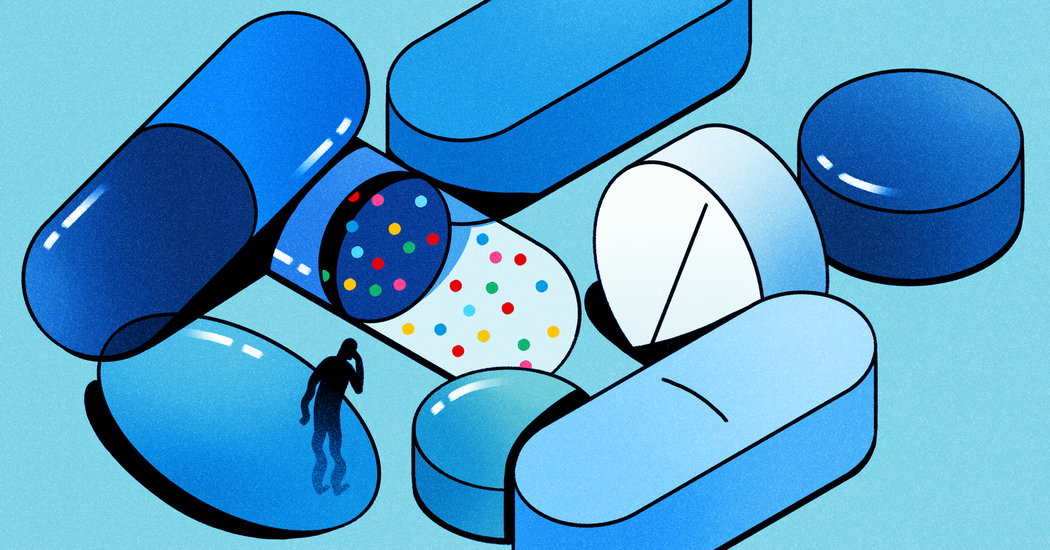
Antidepressants: What to Know About Uses and Side Effects

Is Eating Eggshells Beneficial?

How hockey helped make J.J. McCarthy one of NFL Draft’s most intriguing prospects
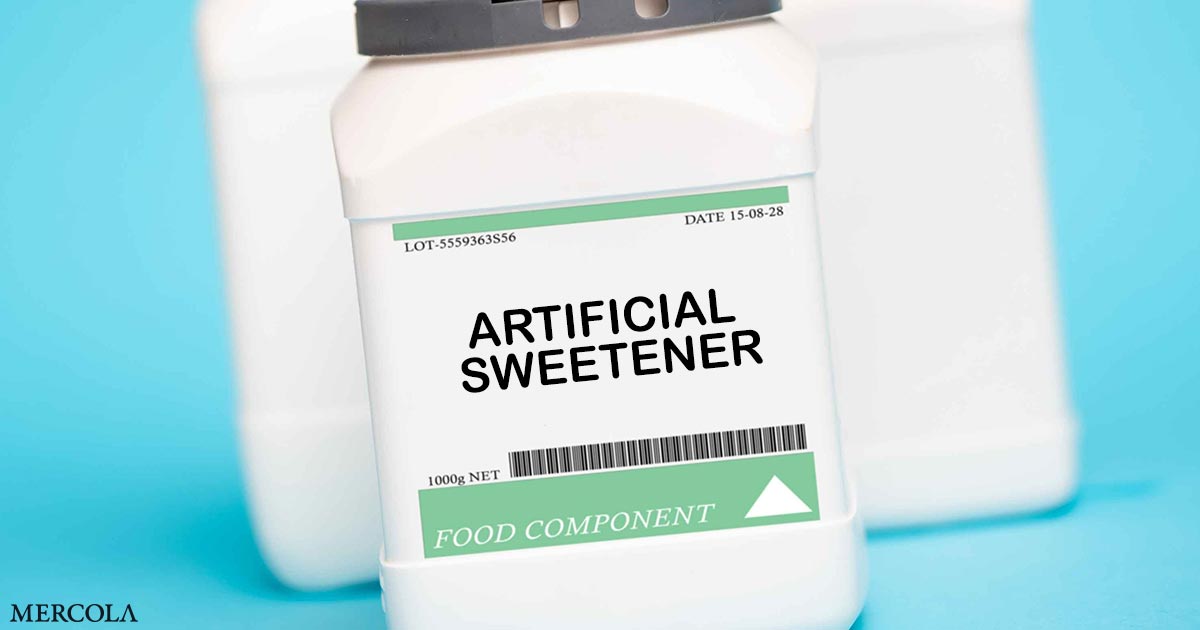
Aspartame Classified as 'Possibly Carcinogenic'
Why You Want More Carbon Dioxide

Mark Clattenburg: The celebrity referee turned PGMOL agitator… via Gladiators
Everton Is Back on Market as Deal With 777 Partners Falters