


Rosendorff says he had concerns about QC. Wade says he was paid to have concerns. “That’s why you get paid the big bucks.” Rosendorff replies: “Not as big bucks as you get paid.” Cue the biggest laugh of the trial so far.

Wade is making a point he’s made before, that quality control samples aren’t patient samples — noting that “nothing bad happens” to patients if a QC test fails.
We are now on to a mid-Jan 2014 email from Rosendorff to the CLIA lab team asking them to refer to very detailed quality-control policies.
Balwani’s response: “I spoke with the teams today and they are all going to put in long hours and do whatever it takes to get this done tomorrow.” Rosendorff testifies: “I had many many battles with Sunny about what was needed versus what he was prepared to allow.”
Rosendorff added: “I do feel that it was very difficult to get answers from Daniel’s team.” In a later email, Rosendorff doubles down on needing the specificity studies: “No they are required. Very important in fact.”
From the email chain. Balwani: “As we know, we take these issues with seriousness. Why didn’t you raise these before to me when I was asking for any issues for months?” Rosendorff: “My apologies for the late feedback regarding our readiness …”
Notable frustration from Rosendorff after he tries to make a point and Wade cuts him off: “I’m just reading emails and saying, yes, that’s what’s happening here.”
We’re now onto discussion of the Walgreens launch. In a 11/10/13 email to Balwani, Rosendorff flagged issues that needed to be addressed before the Walgreens launch. Wade is walking him through the email chain with Balwani, point by point.
After many questions establishing that Rosendorff did not hide Normandy lab from the inspectors, Wade notes that the inspection found “minor deficiencies.” Rosendorff says that Holmes and Balwani were upset that there were deficiencies and that a clean report would have been “ideal.”
Wade is trying to make the point that this was to preserve trade secrets. Rosendorff says this doesn’t make sense, asking who would pin trade secrets to a bulletin board.
We’re looking again at the email from Elizabeth Holmes about walking the auditors through the lab. We’re now seeing the response: “All of the bulletin boards from the lobby to HR were covered with paper so the inspector could not view any of the drawings or items on the boards.”
Wade is starting by asking questions about the Dec. 2013 CA Dept. of Public Health audit that we discussed yesterday. Wade’s going through a document listing preparations for the audit as he tries to establish that Rosendorff had responsibility here.
Court is in session for another day of the Elizabeth Holmes trial! We’re continuing with the cross-examination of former Theranos lab director Adam Rosendorff, which defense attorney Lance Wade expects to take all day.
Rosendorff asked for a bathroom break, and we are instead ending for the day! Will pick back up at 9 a.m. Pacific Time tomorrow.
Important content: The custom-built laboratory information system was named Super Mario. (Other fun names: Jurassic Park = the lab with all of the standard machines, Normandy = the lab with Theranos machines.)
Cross examination has been much slower and calmer now that we’re back from break. Less pressing Rosendorff to answer specific questions and more jokes.
Wade is holding up a copy of the book and talking about the importance of its PR and marketing efforts, as well as its secrecy.
Rosendorff read Walter Isaacson’s Steve Jobs biography and liked the excitement of Silicon Valley, which helped lead him to Theranos. (That Steve Jobs biography was a favorite of Holmes’s, too.)
We’re back from break! And we’ve taken a big step back in time — now looking at the resume Rosendorff sent Theranos when he applied in 2013.
We’re now going back and forth on who was involved in the R&D process. Rosendorff says he was not aware at the time if Holmes was involved with R&D. Per the master validation plan, Rosendorff had to sign off on each assay before it can go into validation.
We’re going through what tests were offered during the friends and family launch. The only tests run through 9/28/13 were two that did not run on the Edison, Rosendorff confirms. The first Edison-based test, TSH, a measure of thyroid function, was run 10/17/2013.
Wade also keeps having Rosendorff read his own testimony, silently, to himself. That’s happening again now.
In the email, Balwani writes, “We feel confident we can handle ~30 samples/day from this location at this point. And it has been 2 months since we have been out in WAG [Walgreens]. It’s time to go live.” Wade now trying to make the point that they had not previously been live.
Found it! We are now looking at an 11/7/13 email from Balwani to Rosendorff about opening their Palo Alto/Uni Ave location to the public on the coming Monday. It had previously only been open to friends/family.
We are now, once again, trying to find the correct pages in the MANY binders the defense gave Rosendorff.
Wade is now saying that Rosendorff testified earlier to a grand testimony that it was a “limited friends and family” but didn’t do so on Friday.
We are now on to the commercial launch. In an email that we saw in direct, Rose Edmonds (a development scientist) says that none of the assays are completely thru validation testing. Rosendorff had testified this is significant because they were just a week from launch.
Wade gave a hypothetical where Rosendorff had rotten food in his office, and subordinates complain to Balwani. Rosendorff continued to seem confused, and Wade is now moving on.
We are now … asking about company hierarchy? (Rosendorff reported directly to Balwani, and Young was also above him.) “Are there ever circumstances where it’s appropriate for senior management to have discussions about a subordinate?” Wade asks. Rosendorff seems confused.
Rosendorff also served as Theranos’s clinical consultant. Holmes wouldn’t qualify for this either.
Wade is asking about Holmes’s education. Famously, she dropped out of Stanford. “Based on your understanding of her background, would she be qualified to be a CLIA supervisor or lab director? Rosendorff: “No, definitely not.”
Wade says, and Rosendorff concedes, that ultimately it was Rosendorff’s responsibility if the tests failed and his responsibility to enforce quality control policies and proficiency tests.
Rosendorff is agreeing with Wade’s questioning that Holmes never told him to report an inaccurate result, and that Holmes never directed him not to pause or discontinue tests he thought were inaccurate.
Wade: “Did you ever use a test on patients that you believed was inaccurate or unreliable?” Rosendorff: “No.” Did he ever provide results that he believed to be unreliable? “No.”
Wade: “Did you faithfully dispatch your legal obligations as lab director at Theranos?” Rosendorff: “Yes, I did.” Wade: “Did you offer lab tests that you knew at the time were inaccurate or unreliable?” Rosendorff: “No … I ordered the laboratory to cease testing.”
Two themes of cross thus far: Wade seems to be trying to prove that Rosendorff worked with the government in shaping his testimony, and is hammering home that Rosendorff was legally and ethically responsible for the lab.
Rosendorff confirms that he was familiar with the regulations. Wade is now asking a series of questions about Rosendorff’s obligations: “You are required to…?” Rosendorff says these are his obligations, but “I received pushback from management.”
Wade is now holding up a stack of papers (maybe an inch thick?) and asking if Rosendorff knew all of those regulations, presumably the stack of papers he’s holding. Davila, the judge: “You’re asking to admit the entirety of this document? It’s how many pages? 122?” It’s admitted.
We’re into Rosendorff’s time at Theranos! Wade asked him if being the CLIA lab director meant he was legally responsible for what happened in the lab, and Rosendorff said yes.
Wade is continuing to try to pick apart the prosecution’s case, noting that they didn’t go in chronological order through the documents. He still hasn’t really asked about Rosendorff’s actual experiences at Theranos.
Wade is arguing that Rosendorff’s testimony in direct doesn’t match what he testified in 2019. Earlier, he just said he wasn’t satisfied with management’s response to proficiency testing. His testimony on Friday was more detailed.
We’re now into questioning about the testimony itself. Wade is asking Rosendorff about his reasons for leaving Theranos. Wade asks if Rosendorff discussed that question/answer with the government. Rosendorff says yes.
Wade presses him on whether he told the government what he was going to testify.
Rosendorff says no.
Wade is now asking about how Rosendorff was prepared to testify by the government. Rosendorff: “I was always instructed by the government to be truthful.” Wade asked: “Did they tell you to give that answer?” Rosendorff: “No.”
Wade is going through a list of people and asking Rosendorff if he’s met each of them. His tone is far more aggressive than with previous witnesses.
We’re starting with cross-examination. Lance Wade, Holmes’s lawyer, is starting by grilling Rosendorff on how many times he’s met with the government.
And, with that, his direct testimony has wrapped. We’ll pick up with cross-examination after a 30-min. break.
Ultimately, Rosendorff said, he left after “endless meetings and conversations, very careful study of medical literature, late nights … great efforts on my part to improve the quality of testing at Theranos.”
Rosendorff testified about why he spoke with then-WSJ reporter John Carreyrou: said he felt a “moral and ethical” obligation to alert the public.
Bostic pointed out the line “We will execute this year.” When did Theranos start testing? he asked. Rosendorff responds: 2013.
More texts from Holmes/Balwani! Holmes: “This year is our year. We can never forget this tiger.” Balwani: “I know, I am focused on it. We will execute this year.” Holmes: “I know. I’m focused on it too. And for our kids never forget who we are.”
On Rosendorff’s last day, he says Balwani offered a handshake, and he declined. Balwani gave him exit paperwork to sign. Balwani said he would be prepared to keep him on, but Rosendorff said it wasn’t worth the risk to his reputation.
Holmes forwarded it to Balwani: “We need to respond to him now and cut him Monday.” Rosendorff had already accepted a job offer at another lab and was planning on leaving — interpreted this as them trying to fire him right before he left.
Nov. 2014 email to Rosendorff asking for a redraw. Rosendorff forwarded this to Holmes/Balwani, and Balwani said the rep “jumped the gun” asking for a redraw. Adam forwarded this to Elizabeth: “I find Sunny’s response offensive and disingenuous. He should apologize.”
Gov’t trying to make the point that Holmes/Balwani are actively courting investments even as Rosendorff raises concerns about crucial problems in the lab.
We’re now looking at Nov. 2014 texts between Balwani and Holmes, talking about investments from Alice Walton and Rupert Murdoch. Balwani: “They are not investing in our company, they are investing in our destiny.”
“…how fundamental it is to all of us for you or any other employee never to do anything you’re not completely confident in.” Rosendorff says he disagrees with this, and we’ve seen emails showing that he raised concerns.
Holmes’s response (pt. 1): “How sad and disappointing to see this from you. Outside of the fact you’ve never emailed me on any concerns you allude to there before but now email this, you know from every conversation we’ve ever had together …”
Now looking at Nov. 14 emails from Rosendorff. “I feel really uncomfortable with what is happening right now in this company. Is there any way you can get Spencer back on the CLIA [Clinical Laboratory Improvement Amendments] license and take me off? I am feeling pressured to vouch for results that I cannot be confident in.”
Christian forwarded the email to Elizabeth, writing: “His response to this was to do a vacutainer redraw & I ended the conversation at that point.” A vacutainer draw is a non-Theranos retest.
He continued: “Further 100% honesty and transparency to the patient is essential. “My first duty is not to Theranos, but to the patient as per my Hippocratic oath “primum non nocere.” “I never said I wouldn’t talk to the MD.”
In an email to Christian, Rosendorff doubled down. “This is not a question of interpreting results — this is a question of the reliability and accuracy of the result.” “The most constructive thing at this point is to offer reliable and robust assays, not to spin.”
Nov. email from Rosendorff about the patient call to Christian: “If you’re asking me to defend these values then the answer is no.” He was refusing to defend the accuracy of the result, Rosendorff testifies.
Emails like this contributed to a “crescendo” of issues, Rosendorff testifies, leading to his resignation in Nov. 2014.
Looking at an email from a medical assistant concerned that HDL and LDL (cholesterol) readings are not adding up. That raises concerns about the accuracy of the test, Rosendorff testifies.
In a follow-up email from Holmes: “Kerry please delineate this based on what we did with the NY inspector recently and send that out.” No one was allowed to enter or exit the Normandy lab during the visit, Rosendorff said. Those directions came from Balwani.
1/26/13 email from Holmes about the upcoming audit from the California Dept. of Public Health: “Let me know if the path for walking the auditors in and downstairs has been cemented so we avoid areas that cannot be accessed, and what that path is.”
Christian forwarded the message to Daniel Young and cc’d Elizabeth. In a later email to Elizabeth and Daniel, Christian wrote that Rosendorff already approved the redraw. “Need to discuss messaging for my call with this doc, with regard to reason for the redraw,” Christian wrote.
Now looking at an email to Christian Holmes to approve a redraw, despite his not having a position in the clinical lab or a medical/science background. Rosendorff says he wasn’t aware Christian was involved in approving redraws.
Now onto discussing transparency. “I felt a conflict between the messaging that the company wanted me to provide … and my duty as a physician” to accurately report results when talking with doctors, Rosendorff says.
In an email chain about the proficiency testing samples, Balwani wrote that Theranos’s validation has been “excellent in the past” and that “it is these PT samples that are off.” Rosendorff testifies that he disagrees.
There was no formal proficiency testing process at Theranos, Rosendorff says. He says he raised these concerns at a mid-2014 meeting to people including Holmes, Theranos’s president, Ramesh Balwani, and the VP Daniel Young. He felt like they gave “lip service” to this issue, and there was no progress made before he left in November.
Rosendorff’s reaction to situations like this: “Every time we got a physician complaint, every time our QC would fail, every time we had a spate of anomalous results, it raised great concerns to me about the accuracy of the testing process.”
We’re looking at an email from someone who has been on coumadin, a blood thinner medication, for 13 years. After switching to Theranos testing, her results came back low, and she increased her dose as a result. “I have not felt ‘right’ since the one increased dose,” she wrote.
I’m back in the courtroom for another day of the Elizabeth Holmes trial! We’re starting with the end of former lab director Adam Rosendorff’s direct testimony.
With that, we’re going to break for the weekend. I’ll be in the courthouse Tuesday, Wednesday and Friday next week — see you on Tuesday!
For the past hour, Rosendorff has testified about problems w various tests, incl. the potassium, chloride and sodium tests. In a 10/27/14 email, he wrote: “I am not sure of the clinical value of a sodium assay, in which the only time we can report it is when it is not critical”
We’re now getting into Rosendorff’s decision to leave. He forwarded work emails with issues of concern to his Gmail account in 2014, testifying that “I wanted to protect myself.” He also says he started looking for another job in mid-2013, shortly after joining Theranos.
Today’s theme seems to be a) Rosendorff was concerned about faulty tests, b) Rosendorff recommended the company stop using those tests and c) Holmes/Balwani were aware but declined to change course.
We’re now on issues with Theranos’s HDL (cholesterol) tests. Rosendorff says he “suspected” Theranos’ HDL was no longer working as of Feb. 2014 and suggested reverting to FDA-approved devices, but received pushback from Balwani, Holmes and Theranos VP Daniel Young.
We’ve now seen two email chains including Holmes/Balwani about complaints/issues that Rosendorff wasn’t included on. Rosendorff says he “absolutely” should have been included on the emails.
Rosendorff is testifying about issues with the hCG tests, which detect pregnancy. In June 2014, Christian Holmes wrote to Elizabeth: “Just fyi-hCG right now causing some serious issues and patient complaints.”
We’re comparing Rosendorff’s time at the University of Pittsburgh to his time at Theranos. At Theranos, complaints about test results were “much more frequent,” and he “felt pressured to defend the company’s results to physicians,” he said.
Theranos devices failed so frequently that it raised questions about the accuracy of the results, Rosendorff testifies. Performance of Theranos assays was worse than non-Theranos analyzers.
Rosendorff is now discussing quality control. As we learned in Cheung’s testimony, quality control happened once a day, and machines would be recalibrated if they failed. This was a frequent discussion topic at Theranos, he testifies.
Rosendorff had a meeting w Holmes where he expressed his concerns. She was very nervous and was not her usual composed self, he said: She was trembling, knee was shaking, she was very upset.
In an email to Holmes, Rosendorff wrote that “A few more weeks to sort through these medical and logistical issues, and getting the proper level of training and staffing would help us tremendously.”nd staffing would help us tremendously.”
An email from Rose Edmonds from 9 days before the launch says “none of our assays are completely through validation including clinical sample testing with fingerstick.” Under CLIA law, the tests need to be validated properly before they can be used for patient care.
Leading up to Sept 2013 commercial launch, there was “a lot of anxiety” about the appropriateness of using modified tests for patient care. The general mood of the company was “very optimistic,” but some were questioning why Theranos wasn’t using its own devices.
The downstairs Theranos lab, which contained the Theranos Edison devices, was called Normandy, Rosendorff said. According to Rosendorff, Balwani called the upstairs lab with conventional devices Jurassic Park: Balwani “believed the conventional devices were dinosaurs.”
Rosendorff starting strong with why he quit Theranos, incl. unwillingness of management to perform proficiency testing and feeling pressured to vouch for tests he wasn’t confident in. Also: “The company was more about PR and fundraising than patient care.”
The government is calling former Theranos lab director Adam Rosendorff today in the trial of Elizabeth Holmes. Per prosecutor John Bostic, this testimony is likely to take all day.

Mattis is done and now a prosecutor is reading text messages between Holmes and Balwani while a forensics guy from PWC says “yes” and “correct.” I guess this is how they have to present this evidence but it is really really bizarre.
On redirect: Why did Mattis initially support Holmes after the WSJ expose and then change his mind? There were too many surprises, he said. “We were unable to help her on the fundamental issues that she was grappling with if we only saw them in the rearview mirror.”
We look at Mattis’ emailed response to Holmes after the WSJ article. “Be swift in response with unassailable truth,” he wrote. “I have full faith in our plan.”
He also asks if Mattis knew Theranos was doing blood tests in a central lab.
Mattis: “I assumed the central Theranos lab was the Theranos machine.”
In cross-exam, Holmes lawyer Kevin Downey asked Gen. Mattis about his qualifications to evaluate Theranos’s technology and be a board director.
Initially Mattis thought the problem was fixable — the company simply messed up its messaging and could come clean. Soon after, he began to question whether or not the Edison machine worked. “There just came a point when I didn’t know what to believe about Theranos anymore.”
After WSJ article, board members emailed Holmes about the allegations. Her response: Theranos was transitioning from operating under one laboratory framework to another. Mattis: “I was still confused.” At a minimum, “we had a reputation problem here and an integrity problem.”
Ominous. After Theranos learned about a 2015 WSJ article by John Carreyrou that exposed problems with Theranos’s technology, there was a board meeting with a slide titled “Duty of Loyalty.” We are shown that slide, except it is comically redacted — all content blacked out — and Mattis doesn’t remember it.
We see an email from Holmes instructing Mattis that, in an interview with Ken Auletta of The New Yorker, he can’t discuss “how our technology works (i.e. that there is a single device that does all tests)”
Fortune published a long correction to that article, which I don’t remember seeing from a lot of other outlets that wrote positive stories. Parloff is listed as a witness and defense is attempting to compel him to turn over his notes.
Assistant U.S. attorney John Bostic pulls up Fortune’s 2014 cover story about Theranos. Mattis spoke to the reporter, Roger Parloff, and said Holmes gave him guidance on what he could and couldn’t say.
Still trying to train my brain to not hear “amino acid” every time they say “immunoassay”
Theranos got a lot of mileage out of a 2013 WSJ article! We see an email where Holmes sends Mattis the link, as well as a slide of it in a Theranos board presentation
We’re going through this board presentation, which has a slide claiming Theranos’s tech had been validated by 10 of the 15 largest pharmaceutical companies, alongside logos of FDA & WHO and a quote from Johns Hopkins.
What were your sources for information about the company? Mattis: “Ms. Holmes.” “Was she the primary source?” “The sole source.”
Mattis also invested $85k into Theranos, which he said was a significant sum “for someone who had been in govt. service for 40 years.”
Did you accept Ms. Holmes’s invitation to join Theranos’s board? “Yes I did, after asking why. I was not a medical person.” She said she wanted his mgmt. and organizational experience.
Mattis testified that he was not aware of Theranos devices ever being used on battlefields, military helicopters, clandestine operations…
Mattis testified that Holmes was “very aggressive” at wanting the military pilot program to get going. “She was very confident that if we got it in there, it would prove itself.” He knew it was a start-up, but noted that Holmes had been working on it for a decade by 2013.
oy, another email where Mattis calls Holmes “young Elizabeth.”
Holmes was the one telling him about the Theranos device’s capabilities, he said. “I was frankly amazed at what was possible.” But he added: “That didn’t take the place of having the device prove itself.”
Mattis testified the size of the Theranos device and its promised capabilities made it so attractive to potential military use. Accuracy and reliability were critical given the casualties, he said. “The stakes are very high.”
In one email, Mattis told Holmes he wants to explore a pilot project to test Theranos machines alongside the army’s existing systems to compare. Mattis testified that he was very “taken” by the possibilities of using a drop of blood for diagnostics.
Mattis, a U.S. general and former secretary of defense, was on Theranos’s board between 2013 and 2016.
We start by looking at 2011 emails between them after meeting. In one, Mattis writes, “thank you for your note, young Elizabeth, and I wish you every success.”
At the courthouse for US v. Holmes. James Mattis has taken the stand.
Gould’s testimony lasted around 15 minutes – From behind a clear mask, she got emotional discussing her experience finding out via Theranos tests that, after three miscarriages, her fourth pregnancy was not viable. The happy ending is that it was. She had a baby. Adjourned!
Defense wraps up by pointing out that Zachman’s practice had many many test results from Theranos beyond Ms. Gould that seemed to be fine. Judge Davila is eager to keep going, even though we are over on time today. Brittany Gould takes the stand.
Defense works to chip away at the testimony by implying that the Theranos test results simply existed on a different scale and should have been “rebaselined.” Also noted that Holmes’s brother Christian, who responded to Zachman’s complaint about the results, apologized.
Oh my, Theranos offered Zachman a “corrected” version of the results which simply removed a decimal point but the she says numbers still wouldn’t have made sense within the context of a viable pregnancy or a loss of one.
“This circumstance was very impactful to me as it stood out as such a red flag for the pregnancy.”
Gould took 5 blood tests, 3 from a subsidiary of Quest Diagnostics and 2 from Theranos. She went on a rollercoaster, with the Quest test showing she was pregnant, the two Theranos tests showing a miscarriage, and 2 more Quest tests showing she was indeed still pregnant.
Zachman describes the case of a patient named Brittany Gould (sp?) who had had 3 miscarriages. She came to see Gould after a positive at-home pregnancy test “to establish that yes, she is pregnant and look at the health of the pregnancy.”
Zachman was on a committee that evaluated service providers and her practice adopted Theranos blood tests around 2014. Theranos even set up a lab downstairs from one of her practice’s offices, which Zachman said was “very exciting.”
New witness: Audra Zachman, a nurse practitioner at an OB-GYN practice.
I have enjoyed chatting with some of the trial-heads and and fans of justice who have shown up to watch (provided they’re not moles :). Today I met a retired paralegal who says he was at the Patty Hearst trial!!
Redirect up. US Attorney Robert Leach reminds jurors that when Gangakhedkar resigned from Theranos, she had concerns about the reliability of Theranos’s tests and discussed them with Holmes.
More bad boss/good boss content: We see an email Gangakhedkar sent to Balwani defending how hard her team was working + an email she sent to her team praising their long hours. She then resigned from Theranos and Holmes attempted to get her to stay, offering time off.
Defense previously showed that Holmes let Gangakhedkar go to India to see family, painting her as a sympathetic boss and Balwani as the aggressive one. “[Balwani’s] trying to make you feel guilty that you weren’t working?” “Yes” “You were frustrated by that?” “Yes.”
We are still doing cross-examination of Gangakhedkar.
Wade shows an email from the former Theranos president, Ramesh Balwani (who goes by Sunny), chastising the lab workers for not working as hard as his software team, painting him as the one pushing unrealistically for overwork.
Zachman will now offer expert testimony on interpreting HCG tests (a hormone used to identify pregnancy status)
You expect HCG levels to double every 48 hours or so in early pregnancy.
Wade goes on a run of questions (peppered with “yes” responses by Gangakhedkar) arguing that the point of R&D is encountering issues and setbacks and fixing them.
“In R&D sometimes you have to fail before you can succeed right?”
“Yes.”
We see an email where Holmes asked Gangakhedkar for some testing data ahead of a meeting with the DoD. Gangakhedkar emails that Vitamin D data isn’t ready and Holmes writes asking for data on other tests. The point is, apparently, look at this example of Holmes not doing fraud.
The Defense strategy re: Theranos lab problems seems to be: look, real work was being done; there were processes in place that sure seemed rigorous; the very people pointing out problems also signed off on it all.
So far it’s basically a call and response, where Wade describes work of Gangakhedkar + Theranos’s lab, and Gangakhedkar replies “yes.” “Were you proud of that work?” “Yes.” “And others at the company were happy about that work as well?” “I think so.”
Back in the San Jose courtroom today for more US v Holmes. Surekha Gangakhedkar, a scientist at Theranos, is back on the stand being cross-examined by Holmes’s lawyer Lance Wade.
With that, Judge Davila is ending Gangakhedkar’s testimony for the day and instructing jurors not to consume media content about the trial, as always. The trial will resume on Tuesday — Erin Griffith will be at the courthouse to bring you live updates.
We are now onto cross-examination. Holmes’s lawyer is questioning her about G.S.K.’s study of Theranos’s assays, pointing out that the study promoted her work. “The Theranos system eliminates the need for a lab and provided quality data,” the G.S.K. memo said.
Despite having signed an N.D.A., Gangakhedkar printed out some documents and took them home when she left Theranos. “I was worried that I would be blamed,” she testified.
Three days after the email from Balwani, Gangakhedkar sent Holmes her resignation email. She testified that she was “very stressed and unhappy and concerned” with the planning of the Walgreens launch.
In an email from Balwani to Gangakhedkar, with Holmes copied, Balwani said the software team had been working until 3:07 a.m., but that the Edison blood-testing devices Gangakhedkar’s team worked on were “all sitting idle.” This was an example of the pressure they were under, Gangakhedkar said.
And, with that, Cheung has been dismissed. The government is calling Surekha Gangakhedkar now, a former Theranos team manager.
The government is now asking questions about a document that says, among other things, that Theranos’s devices “can be operated with minimal training” and that its results have “precision and accuracy equivalent to traditional clinical laboratory analyzers.” Neither is true, Cheung says.
Cheung said they were constantly having to recalibrate the machines, which made results take 2-3 days rather than the couple hours promised. “We had people sleeping in the car because it was taking too long,” she said.
Cheung just said she “became concerned about a month in” with the vitamin D samples, in November of 2013. She was concerned about the performance of the tests and that they were being used on patient samples.
Defense is done with cross-examination, after showing Cheung Theranos policy documents she said she’d never seen. The government is now asking questions again for redirect.
Holmes’s lawyer is asking Cheung a lot of questions about quality control checks that occurred on the Theranos devices. “There is a recognition that some errors would happen and this was the policy on how to deal with those errors,” he said.
Erika Cheung is now taking the stand as cross-examination continues.
The update you’ve all been waiting for: The judge is STILL pronouncing it ther-AH-nos.
In the courthouse now for another day of the Elizabeth Holmes trial. We’re expecting to wrap up testimony today from Erika Cheung, one of the key whistleblowers in the case.
That’s it for today.🩸💉⚖️
So far the theme of the cross-exam of Cheung seems to be using excruciatingly arcane details about the processes and procedures of the Theranos lab to show that its work was very complicated, involving lots of smart, pedigreed people.
Cheung testified that in meetings about quality control failures, Theranos’s lab directors ignored the most obvious possible reason for the failures: “The Edison devices didn’t work.”
Trial gear alert: A reporter brought their own binoculars to see the exhibits on the TV screens.
Erika Cheung is back on the stand.
She described Theranos’s practice of demoing blood tests for V.I.P.s, where some of the results came from Theranos machines and others from Siemens analyzers.
At this point we have heard lawyers and witnesses pronounce “Theranos” hundreds of times, making me start to wonder whether judge is trying to mess with us by sticking to his “ther-AHHHHH-nos” pronunciation.
I should note the woman who clapped and yelled “you’re a good mom!” at Holmes yesterday suddenly stormed out of the courtroom after Judge Davila warned everyone that yelling stuff like that in front of any jurors could cause a mistrial. I don’t see her here today!
Elizabeth Holmes’s entourage is down to just her mom today.
24World Media does not take any responsibility of the information you see on this page. The content this page contains is from independent third-party content provider. If you have any concerns regarding the content, please free to write us here: contact@24worldmedia.com

The Biden administration on Wednesday canceled...
Every family has its archetypes, so here’s...
On March 7, 2024,1 Dr. Naomi Wolf sounded an...
There are many benefits to buying and consuming...
On a December morning in central London, more...
In the 10 years since the drugmaker Gilead...
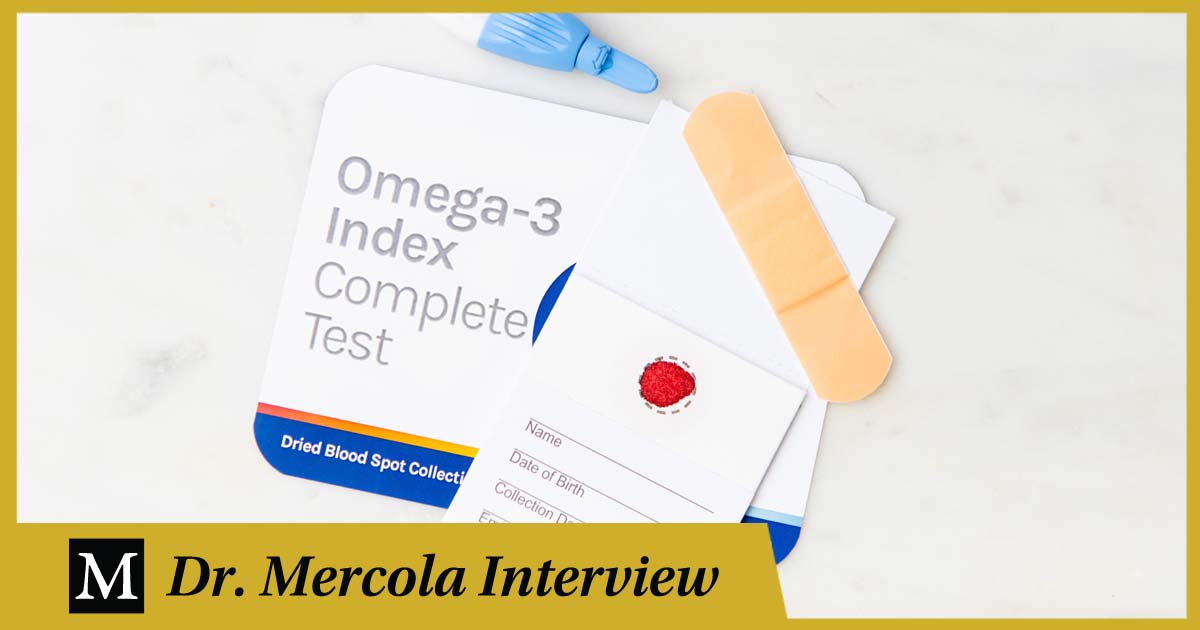
Bill Harris: Omega-3 – A Simple Way to Lower Your Risk of Disease
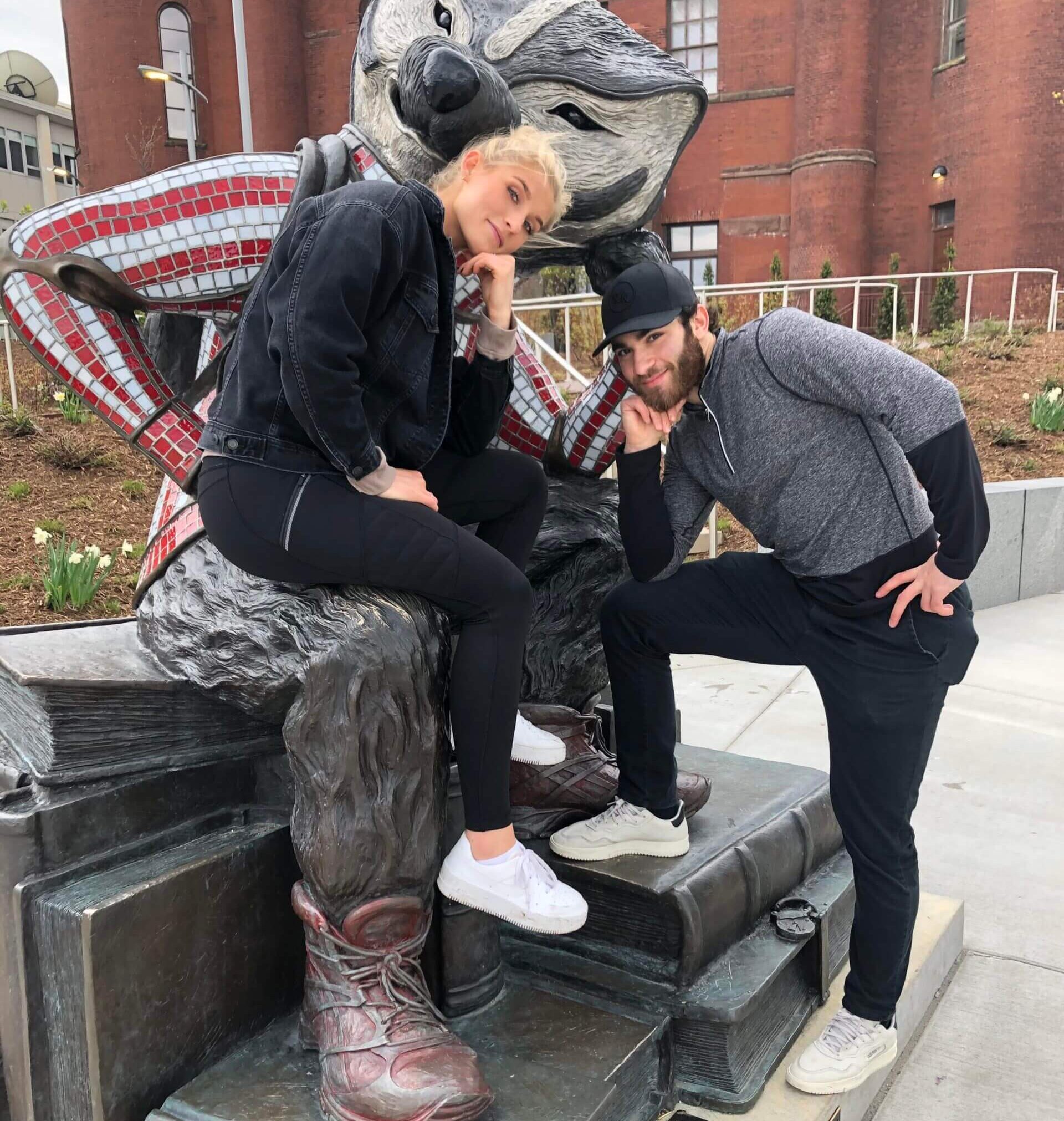
Chasing a hockey dream together: How Luke and Sophia Kunin make the first NHL-PWHL marriage work
Why Constipation Is on the Rise

‘To the Future’: Saudi Arabia Spends Big to Become an A.I. Superpower
Antidepressants: What to Know About Uses and Side Effects

Is Eating Eggshells Beneficial?
How hockey helped make J.J. McCarthy one of NFL Draft’s most intriguing prospects
Aspartame Classified as 'Possibly Carcinogenic'
Why You Want More Carbon Dioxide
Mark Clattenburg: The celebrity referee turned PGMOL agitator… via Gladiators
Everton Is Back on Market as Deal With 777 Partners Falters