

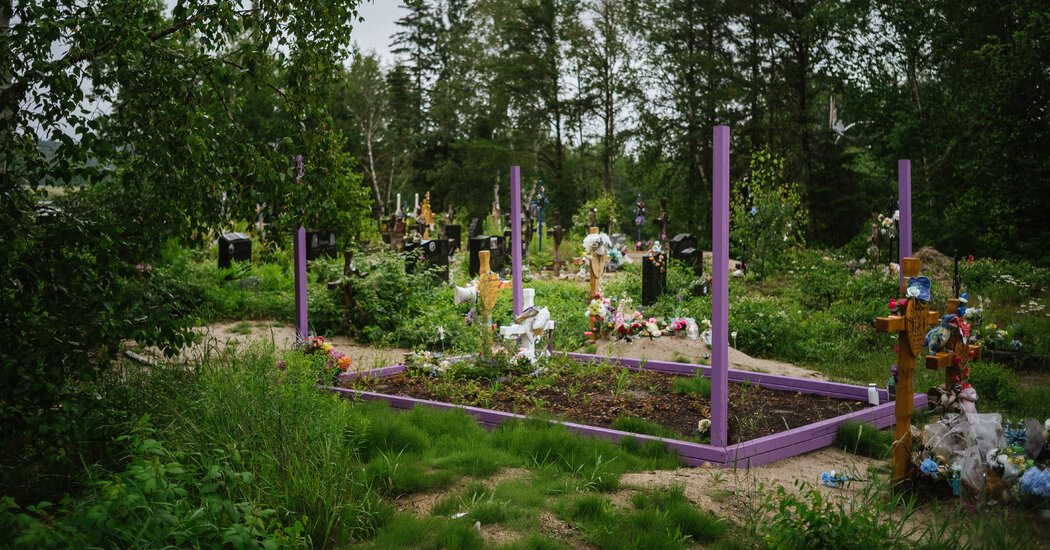
MONTREAL — It was a case that shook Canada: A 37-year-old Indigenous mother of seven died in a Quebec hospital last year after a nurse had taunted her, “You’re stupid as hell,” only good at having sex, and “better off dead.”
On Tuesday, a coroner said that the death of the woman, Joyce Echaquan, could have been prevented and that racism and prejudice had played a role in her treatment. Because of bias, she said, medical staff had erroneously assumed Ms. Echaquan was suffering withdrawal from narcotics.
But there was no evidence that Ms. Echaquan, who had a history of heart problems, was experiencing a narcotics withdrawal, the coroner, Géhane Kamel, said.
“This was a death that could’ve been prevented,” Mr. Kamel said Tuesday. In a report released last week that detailed lapses in Ms. Echaquan’s care, Ms Kamel said the evidence suggested that she had died of a pulmonary edema, an excess of fluid in the lungs.
On Tuesday, at a news conference explaining her findings, Ms Kamel called on the Quebec government to recognize “systemic racism” in the health care system and across the province.
If Ms. Echaquan were a white woman, Ms. Kamel said, she would still be alive today.
Ms. Echaquan died on Sept. 28, 2020, after capturing the medical staff’s taunts in a Facebook Live broadcast that went viral across Canada, spurring widespread anger. The video became a potent global symbol that Canada’s vaunted health care system was failing Indigenous people.
The retired Quebec Superior Court Justice Jacques Viens had already concluded in a 2019 report that “cultural barriers” and prejudice in the health care system in Quebec were having “dire consequences” for Indigenous people. He detailed numerous problems, including “delayed diagnoses” and the failure of medical staff to order necessary exams or medication.
Following the broadcast of Ms. Echaquan’s video, the hospital fired the nurse and an orderly. But the government of Quebec’s premier François Legault has not acknowledged the existence of systemic racism in the province.
It has also refused to adopt “Joyce’s Principle,” a set of policies aimed at providing fair access to health services for Indigenous people, because the document outlining the policies refers to “systemic racism.”
Mr. Legault said later Tuesday that racism and discrimination against Indigenous people were unacceptable. He said the health care authority that runs the hospital where Ms. Echaquan had died had taken several measures to combat racism, including instituting cultural sensitivity training for staff.
But Mr. Legault said he stood by his belief that there was not systemic racism in Quebec. “To say that the system in its entirety is racist,” he said, “I cannot accept that.”
The comments drew criticism from Indigenous leaders, including Chief Constant Awashish, the leader of Ms. Echaquan’s Atikamekw First Nations community, who said that Mr. Legault’s response showed that there was “a lot of work” to do.
The remains of what are presumed to be Indigenous children have been discovered at the sites of defunct boarding schools in Canada. Here’s what you should know:
In the case of Ms. Echaquan, prejudice had greeted her from the moment she entered Joliette Hospital, Ms. Kamel said. She said medical staff assumed she was suffering from a drug withdrawal and had treated her with contempt.
Ms. Echaquan was “infantilized and labeled as a drug abuser,” she told reporters, and the care she received was “tainted with bias.”
“Some were silent witnesses. Some just did not act,” Ms. Kamel said of the hospital staff. She added: “In this case we have proof that the system failed.”
Without Ms. Echaquan’s Facebook Live video of her treatment, she added, the circumstances of her death might never have been known.
In her report, Ms. Kamel called on the Quebec government take steps to eliminate systemic racism.
“We have witnessed an unacceptable death and we must ensure that it was not in vain and that we learn from this tragedy as a society,” she wrote in her report. “It is therefore unacceptable that broad swaths of society deny a reality that is so well documented.”
Carol Dubé, Ms. Echaquan’s husband, said on Tuesday that the coroner’s report was a vindication that his wife had been the victim of prejudice.
“The system today still allows people with prejudice to commit horrors,” he said.
24World Media does not take any responsibility of the information you see on this page. The content this page contains is from independent third-party content provider. If you have any concerns regarding the content, please free to write us here: contact@24worldmedia.com

The Biden administration on Wednesday canceled...
Every family has its archetypes, so here’s...
On March 7, 2024,1 Dr. Naomi Wolf sounded an...
There are many benefits to buying and consuming...
On a December morning in central London, more...
In the 10 years since the drugmaker Gilead...

Bill Harris: Omega-3 – A Simple Way to Lower Your Risk of Disease
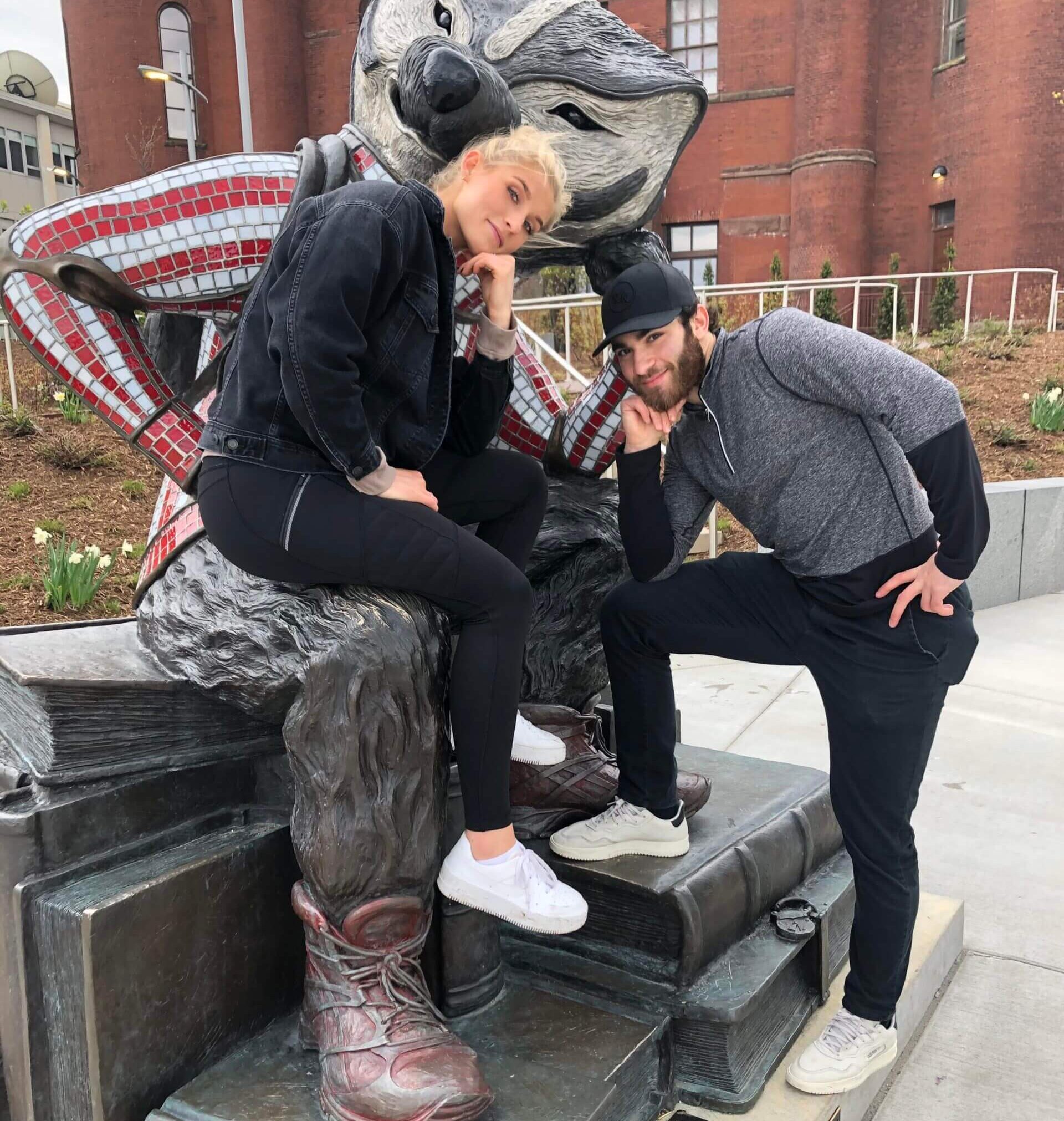
Chasing a hockey dream together: How Luke and Sophia Kunin make the first NHL-PWHL marriage work
Why Constipation Is on the Rise

‘To the Future’: Saudi Arabia Spends Big to Become an A.I. Superpower
Antidepressants: What to Know About Uses and Side Effects

Is Eating Eggshells Beneficial?

How hockey helped make J.J. McCarthy one of NFL Draft’s most intriguing prospects
Aspartame Classified as 'Possibly Carcinogenic'
Why You Want More Carbon Dioxide

Mark Clattenburg: The celebrity referee turned PGMOL agitator… via Gladiators

Everton Is Back on Market as Deal With 777 Partners Falters