

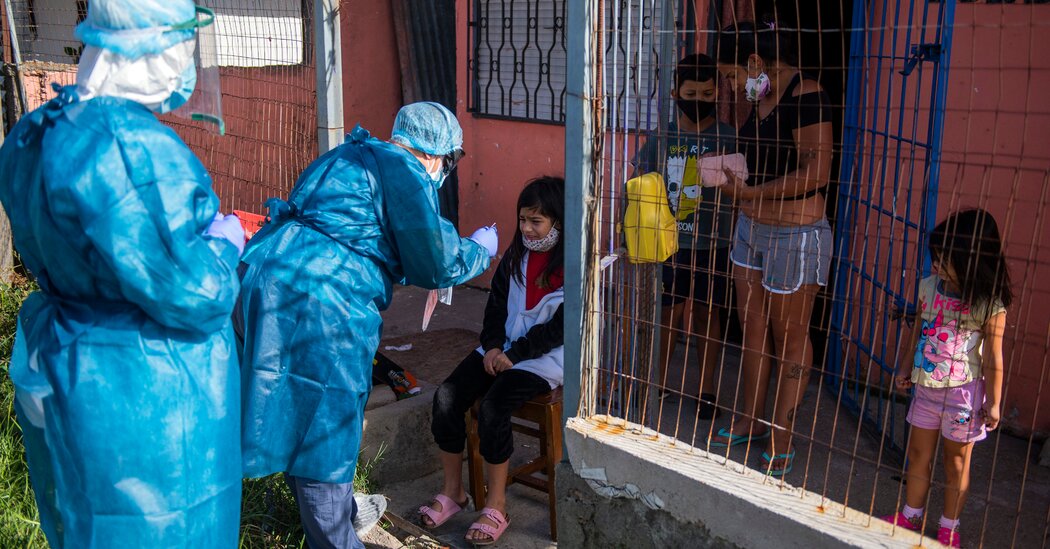
The cost to UNICEF of Paxlovid — including Pfizer’s insistence that UNICEF keep how much it pays confidential — remains a sticking point, said Dr. Philippe Duneton, who runs the therapeutics arm of the W.H.O. consortium. In announcing its “strong recommendation” for Paxlovid, the W.H.O. took the highly unusual step of publicly scolding Pfizer for a “lack of transparency,” which makes it difficult to know which countries have the drug and what they are paying.
“We need to have better visibility in terms of price,” Dr. Duneton said.
Manufacturers often prefer that the details of their sales agreements be secret so as not to weaken their hand with other potential buyers. Pfizer’s chief executive, Albert Bourla, reported last week that Paxlovid had been a “key growth driver” for the company, which is using a “tiered pricing approach” in which low- and lower-middle-income countries will get Paxlovid at a not-for-profit price.
In response to an inquiry from The New York Times, Pfizer issued a statement saying that it was “deeply disappointed by the sentiment expressed by our partners,” adding, “We have in good faith heard and responded to many of their concerns.”
Both Pfizer and Merck have also taken steps to make inexpensive generic versions of their pills available, signing licensing agreements with the Medicines Patent Pool, which was created during the global AIDS crisis to bring drugs to low- and middle-income nations at low cost. It took years, and bitter fights between activists and companies, to reach such agreements for H.I.V. drugs.
But the agreements for Covid antivirals do not apply to many middle-income nations, including much of Latin America and parts of northern Africa and Asia. The result, experts say, is that both poor and rich nations will have access, but countries in the middle will have to negotiate with the companies — or force the drugmakers to turn over their intellectual property.
So far, 36 companies from 12 countries have signed up to make generic Paxlovid. Companies in India are already making generic versions of both Paxlovid and molnupiravir. The expectation is that both drugs will ultimately be available in about 100 low- and middle-income countries, covering about half the world’s population. The companies will not receive royalties from the sales while the W.H.O.’s declaration of the pandemic as a global health emergency remains in effect.
“Given the severity of the pandemic and given the fact that vaccines had a very uneven penetration rate, we felt that this was a very important contribution the company could make,” said Paul Schaper, executive director for global public policy at Merck.
24World Media does not take any responsibility of the information you see on this page. The content this page contains is from independent third-party content provider. If you have any concerns regarding the content, please free to write us here: contact@24worldmedia.com

The Biden administration on Wednesday canceled...
Every family has its archetypes, so here’s...
On March 7, 2024,1 Dr. Naomi Wolf sounded an...
There are many benefits to buying and consuming...
On a December morning in central London, more...
In the 10 years since the drugmaker Gilead...
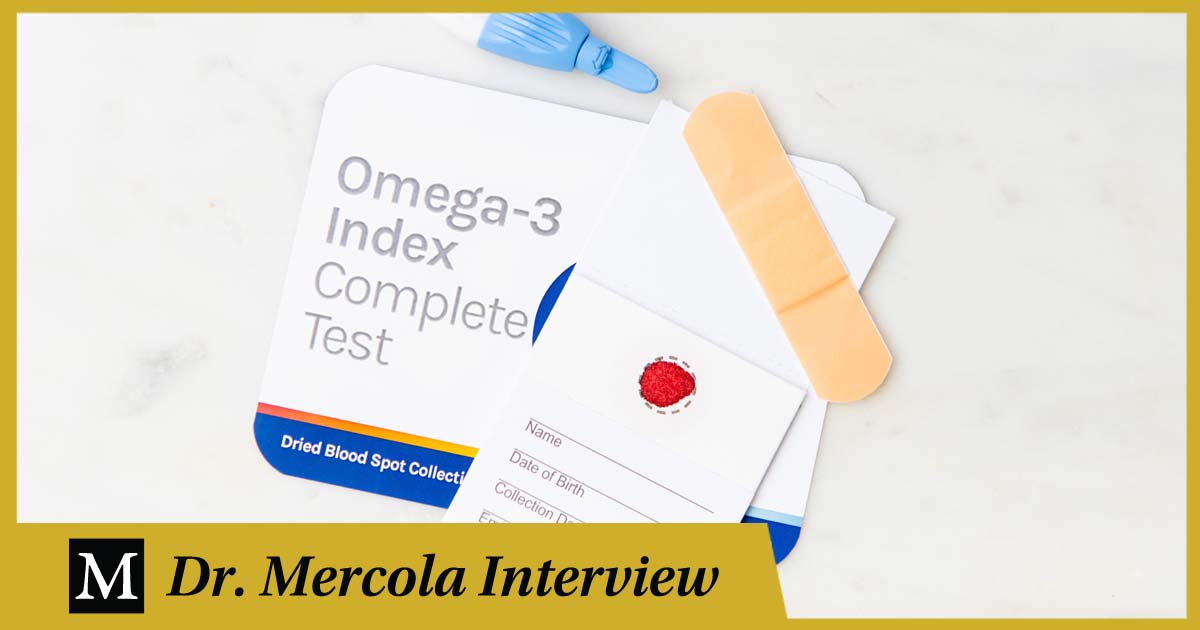
Bill Harris: Omega-3 – A Simple Way to Lower Your Risk of Disease

Chasing a hockey dream together: How Luke and Sophia Kunin make the first NHL-PWHL marriage work

Why Constipation Is on the Rise

‘To the Future’: Saudi Arabia Spends Big to Become an A.I. Superpower
Antidepressants: What to Know About Uses and Side Effects

Is Eating Eggshells Beneficial?

How hockey helped make J.J. McCarthy one of NFL Draft’s most intriguing prospects
Aspartame Classified as 'Possibly Carcinogenic'
Why You Want More Carbon Dioxide
Mark Clattenburg: The celebrity referee turned PGMOL agitator… via Gladiators

Everton Is Back on Market as Deal With 777 Partners Falters