

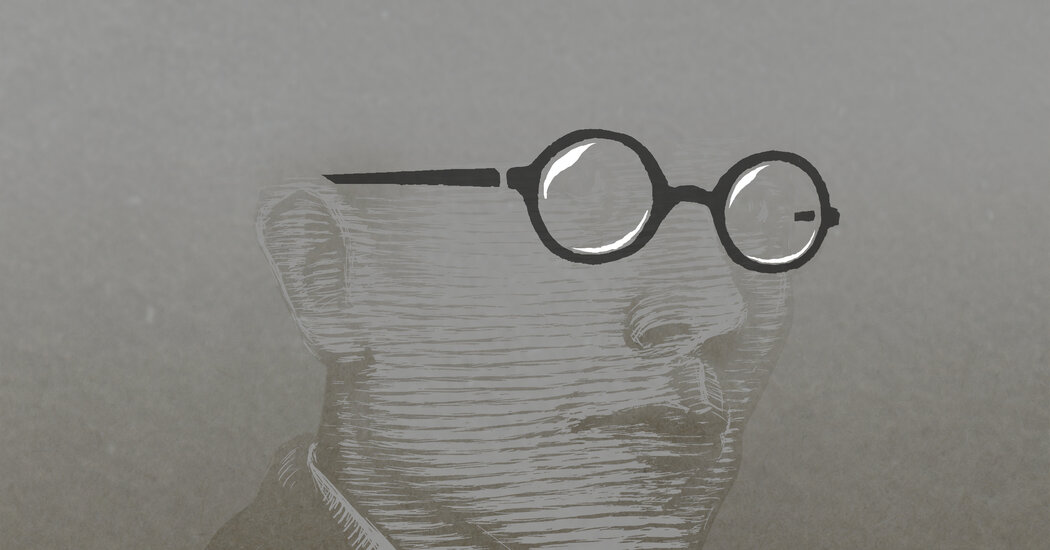
Beginning in 2000, after hearing a rumor that Dr. Friedrich Wegener had ties to National Socialism, Dr. Matteson and a colleague spent years combing through World War II archives around the world. They eventually learned that Dr. Wegener was a Nazi supporter who had worked three blocks from the ghetto in Lodz, Poland, and might have dissected victims of medical experimentation. In 2011, several major medical organizations moved to replace Wegener’s syndrome with “granulomatosis with polyangiitis” — a mouthful, admittedly. (“Wegener’s” can still be found in the ICD-11.)
The hunt for Nazi names was on. Clara cells, a type of cell that lines the lungs and secretes mucus, were found to be named for a Nazi doctor who experimented on soon-to-be-executed prisoners. The cells were renamed club cells, reflecting their bulbous shape. Reiter’s syndrome, a form of arthritis caused by a bacterial infection, was renamed “reactive arthritis” after it was found to have been named for a doctor who performed deadly typhus experiments on prisoners of the Buchenwald concentration camp.
In most cases, the name change fit with medicine’s growing preference for descriptive terms over honorific ones. “Many of us just don’t use eponyms because they’re not anatomically informative,” said Jason Organ, an anatomist at Indiana University. Rather than a fallopian tube, he said, “uterine tube just makes more sense — it tells you what it is.” In some cases, the inconsistent use of eponyms can even lead to medical errors, Dr. Organ added.
Not all anatomists agree with this slash-and-burn approach. Dr. Sabine Hildebrandt, an anatomical educator at Harvard Medical School, trained in Germany a few years before the legacy of Nazi medicine began coming to light. To her, eponyms provide an opportunity to remind future doctors of the path medicine must never go down again. “I would like to see them not as badges of honor, necessarily, but as historical markers — as teaching moments,” she said.
In the classroom, Dr. Hildebrandt highlights Frey’s syndrome, one of the rare medical eponyms that celebrates both a female researcher and a victim of the Holocaust. The syndrome, a neurological condition that can cause heavy facial sweating while eating, is named for Lucja Frey-Gottesman, a Polish neurologist who was murdered by the Nazis after being sent to the Lvov ghetto.
24World Media does not take any responsibility of the information you see on this page. The content this page contains is from independent third-party content provider. If you have any concerns regarding the content, please free to write us here: contact@24worldmedia.com

The Biden administration on Wednesday canceled...
Every family has its archetypes, so here’s...
On March 7, 2024,1 Dr. Naomi Wolf sounded an...
There are many benefits to buying and consuming...
On a December morning in central London, more...
In the 10 years since the drugmaker Gilead...
Bill Harris: Omega-3 – A Simple Way to Lower Your Risk of Disease

Chasing a hockey dream together: How Luke and Sophia Kunin make the first NHL-PWHL marriage work

Why Constipation Is on the Rise

‘To the Future’: Saudi Arabia Spends Big to Become an A.I. Superpower

Antidepressants: What to Know About Uses and Side Effects

Is Eating Eggshells Beneficial?

How hockey helped make J.J. McCarthy one of NFL Draft’s most intriguing prospects

Aspartame Classified as 'Possibly Carcinogenic'

Why You Want More Carbon Dioxide

Mark Clattenburg: The celebrity referee turned PGMOL agitator… via Gladiators

Everton Is Back on Market as Deal With 777 Partners Falters