

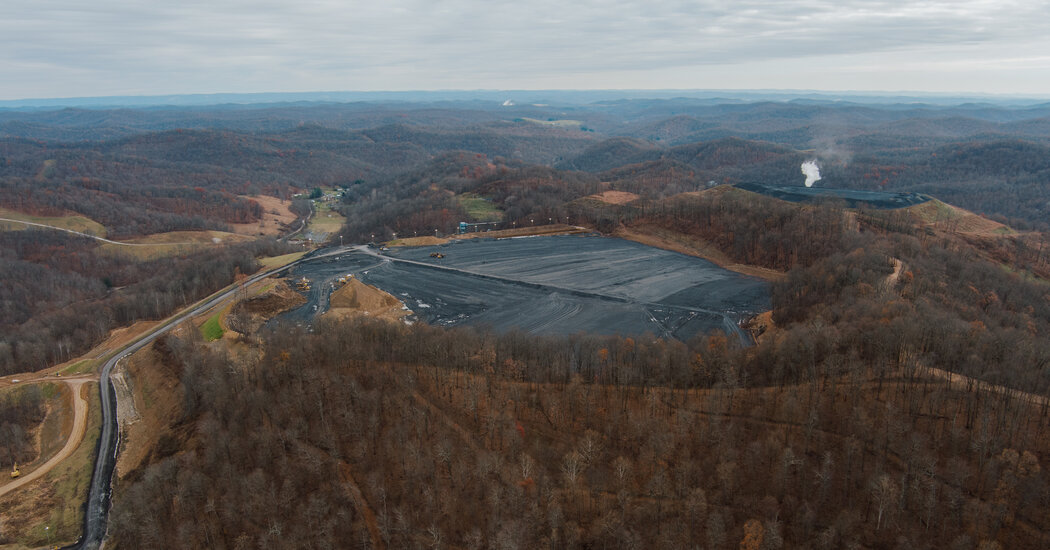
All of that has raised the stakes for courting coal miners.
“Our guiding principle is the belief that we don’t have to choose between good jobs and a clean environment,” said Jason Walsh, the executive director of the BlueGreen Alliance, which has united labor and environmental groups to marshal support for initiatives like Mr. Biden’s. “But our ability to continue to articulate that belief with a straight face depends on the policy choices we make.”
The pandemic continues to impact the U.S. economy in a multitude of ways. One key factor to keep an eye on is the job market and how it changes as the economic recovery moves forward.
“Coal miners,” he added, “are at the center of that.”
It is impossible to explain mine workers’ jaundiced view of Mr. Biden’s agenda without appreciating their heightened economic vulnerability: Unlike the carpenters and electricians who work at power plants but could apply their skills to renewable-energy projects, many miners are unlikely to find jobs on wind and solar farms that resemble their current work. (Some, like equipment operators, have more transferable skills.)
It is also difficult to overstate the political gamesmanship that has shaped the discourse on miners. In her 2016 presidential campaign, Hillary Clinton proposed spending $30 billion on economic aid for coal country. But a verbal miscue — “We’re going to put a lot of coal miners and coal companies out of business,” she said while discussing her proposal at a town hall — allowed opponents to portray her as waging a “war on coal.”
“It is a politicized situation in which one political party that’s increasingly captured by industry benefits from the status quo by perpetuating this rhetoric,” said Matto Mildenberger, a political scientist at the University of California, Santa Barbara, who studies the politics of climate policy.
And then there is Mr. Manchin, a complicated political figure who is among the Senate’s leading recipients of campaign money from the fossil fuel industry.
Mr. Manchin has sometimes resisted provisions favored by the miners’ union, such as wage-replacement payments to coal workers who must accept a lower-paying job. “At the end of the day, it wasn’t something he was interested in doing,” said Mr. Smith, the union’s lobbyist. A spokeswoman for Mr. Manchin declined to comment.
Yet in other ways Mr. Manchin has channeled his constituents’ feelings well, suggesting that he might be more enthusiastic about renewable-energy legislation if they were.
24World Media does not take any responsibility of the information you see on this page. The content this page contains is from independent third-party content provider. If you have any concerns regarding the content, please free to write us here: contact@24worldmedia.com

The Biden administration on Wednesday canceled...
Every family has its archetypes, so here’s...
On March 7, 2024,1 Dr. Naomi Wolf sounded an...
There are many benefits to buying and consuming...
On a December morning in central London, more...
In the 10 years since the drugmaker Gilead...

Bill Harris: Omega-3 – A Simple Way to Lower Your Risk of Disease


Chasing a hockey dream together: How Luke and Sophia Kunin make the first NHL-PWHL marriage work

Why Constipation Is on the Rise

‘To the Future’: Saudi Arabia Spends Big to Become an A.I. Superpower

Antidepressants: What to Know About Uses and Side Effects

Is Eating Eggshells Beneficial?

How hockey helped make J.J. McCarthy one of NFL Draft’s most intriguing prospects

Aspartame Classified as 'Possibly Carcinogenic'
Why You Want More Carbon Dioxide

Mark Clattenburg: The celebrity referee turned PGMOL agitator… via Gladiators

Everton Is Back on Market as Deal With 777 Partners Falters